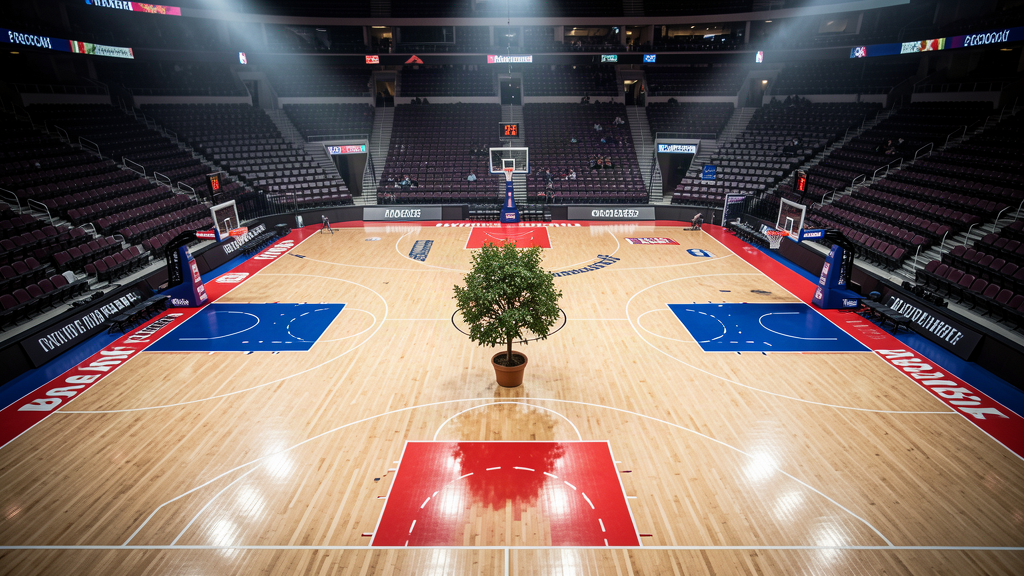
LOS ANGELES, Calif. — The NBA is investigating whether Los Angeles Clippers owner Steve Ballmer funneled $28 million to star player Kawhi Leonard through a “green” financial services company called Aspiration — a firm that promised to plant trees but, according to multiple reports, may have planted approximately none of them.
The inquiry centers on a four-year, $28 million endorsement deal that Leonard signed with Aspiration, a self-described “socially-conscious and sustainable banking services” firm. Ballmer had previously invested $60 million in Aspiration. The company subsequently promised Leonard $28 million in an endorsement deal. Aspiration then went bankrupt. The trees, according to court documents and investigative reporting by ESPN’s Pablo Torre, remain largely theoretical.
The NBA and the Clippers are now clashing over the details. The league says the investigation has found “inaccuracies” in ESPN’s reporting. The Clippers say the deal was “a genuine endorsement arrangement with a real company that happened to go bankrupt, which is something that happens to companies.” Both sides agree on one thing: no one can find the trees.
THE BALLMER-KAWHI TREE SCHEME: WHAT WE KNOW
- $60 million — Ballmer's investment in Aspiration
- $28 million — Leonard's endorsement deal with Aspiration
- 0 — number of trees that have been definitively located
- 1 — number of bankruptcy filings by Aspiration
- 4 years — length of the endorsement deal
- ∞ — number of times "socially-conscious" has been used to describe a shell game
The case has become a lightning rod for broader questions about how NBA teams compensate star players beyond the salary cap. The salary cap exists to maintain competitive balance — a mechanism that prevents wealthy owners from simply buying championship rosters. When an owner routes money through a third-party company to a player, the cap becomes, in the words of one league official, “a suggestion rather than a rule.”
“He invested $60 million in a company that paid his best player $28 million, and the company went bankrupt,” said a former NBA financial analyst. “If you squint, it looks like a business transaction. If you don’t squint, it looks like Steve Ballmer bought Kawhi Leonard a $28 million gift and called it a tree.”
Aspiration, founded in 2013, marketed itself as a “green banking” alternative to traditional financial institutions. The company’s pitch was simple: open an account, and Aspiration would plant a tree for every purchase you made. The concept was popular enough to attract Ballmer’s investment and Leonard’s endorsement. It was not popular enough to survive the contact with actual accounting.
The Clippers have pushed back against the investigation, arguing that the NBA’s own rules allow players to pursue endorsement deals outside the team. “Kawhi is a global brand,” said a Clippers spokesperson. “He endorses sneakers, fast food, and apparently sustainable banking. The fact that one of those companies went bankrupt is not the Clippers’ responsibility.”
The NBA has disputed “key details” in ESPN’s reporting but has not specified which details are inaccurate. The league’s statement was widely described as “the most carefully worded sentence in the history of professional sports.”
At press time, Steve Ballmer was reportedly “still very excited about trees” and was “looking into other tree-related investment opportunities” that had “nothing to do with basketball, probably.”