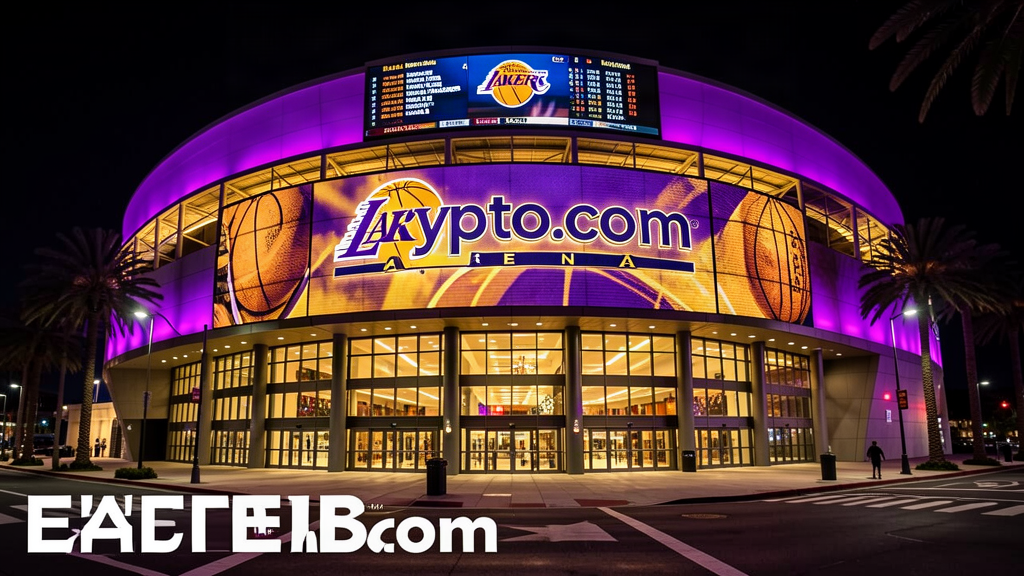
LOS ANGELES — The Los Angeles Lakers have been sold to a group led by Josh Kushner and former Disney CEO Bob Iger for $12.5 billion, a record-breaking price that makes the team the most expensive sports franchise in history and confirms what everyone already suspected: that the only thing more valuable than a basketball team in Los Angeles is a basketball team in Los Angeles that also comes with a implicit guarantee of Disney+ subscriptions.
The deal, first reported by ESPN on Wednesday, values the Lakers at $12.5 billion — a 25% premium over the $10 billion that billionaire Mark Walter paid for the team just 14 months ago. In investment terms, that’s a 25% return in just over a year, which would be extraordinary for a stock portfolio and is absolutely mind-boggling for a basketball team that hasn’t won a championship since 2020 and whose best player is currently recovering from a knee injury that medical sources describe as “the kind of thing that happens when you’re 41 years old and still trying to play professional basketball.”
Kushner, the founder of Thrive Capital and brother-in-law to Jared Kushner, shocked the sports world by partnering with Iger, the former Disney CEO who spent 15 years transforming the Mouse House into a global entertainment empire and who presumably sees the Lakers as “content with a basketball theme.” In a joint statement, Kushner and Iger said they were “honored to steward one of the most iconic franchises in sports history” and promised to “bring championships back to Los Angeles,” which is what every new owner of a sports team says before discovering that winning championships is considerably harder than buying teams that used to win championships.
The $12.5 billion price tag is, to put it in perspective, larger than the GDP of half the countries in the United Nations. It is more than the annual revenue of the entire WNBA, NWSL, and Major League Soccer combined. It is roughly what Americans spend on Halloween candy each year, except instead of candy you get a basketball team, a celebrity-studded front row, and the constant low-grade anxiety of owning something that LeBron James might decide to leave via a text message.
LAKERS SALE: BY THE NUMBERS
- $12.5B — sale price (previous record: $10B, set by Mark Walter in June 2025)
- 14 — months since the previous sale (Walter's purchase already feels like ancient history)
- 25% — return on investment for Walter (bought at $10B, sold at $12.5B, didn't even have to coach)
- 17 — NBA championships the Lakers have won (most recent: 2020)
- 1 — LeBron James (still playing, still recovering, still 41)
- $12.5B — amount of money that could solve several actual problems but instead bought a basketball team
The sale raises an inevitable question: what exactly are Kushner and Iger buying? The Lakers are not just a basketball team. They are a lifestyle brand, a content engine, a paparazzi magnet, and a real estate portfolio disguised as a sports franchise. The Crypto.com Arena, which the Lakers share with the NHL’s Kings, generates revenue from concerts, conventions, and the occasional celebrity sighting that keeps the tabloid industry in business. In this sense, the Lakers are less a basketball team than a “vertical integration opportunity,” which is the kind of phrase Bob Iger invented.
Financial analysts were divided on whether the price was justified. JPMorgan’s sports finance team issued a note calling the deal “a premium acquisition of a premium asset in a premium market,” which is what you say when you want to sound smart without committing to an opinion. Goldman Sachs was more blunt: “The Lakers are worth whatever someone is willing to pay, and Josh Kushner is willing to pay $12.5 billion.” This was described as “analysis” in the financial press.
The sale also marks the latest chapter in the NBA’s ongoing transformation from a basketball league into a real estate investment vehicle with occasional games. The last three NBA franchise sales — the Suns at $4 billion, the Bucks at $3.5 billion, and now the Lakers at $12.5 billion — suggest that the league’s primary product is not basketball but rather the opportunity to own a culturally significant asset in a major media market, which is a business model that happens to require a basketball team but does not require winning basketball games.
At press time, LeBron James had posted an Instagram story showing a basketball emoji and a champagne emoji, which sports reporters interpreted as either a celebration of the new ownership or a preview of his trade demand.