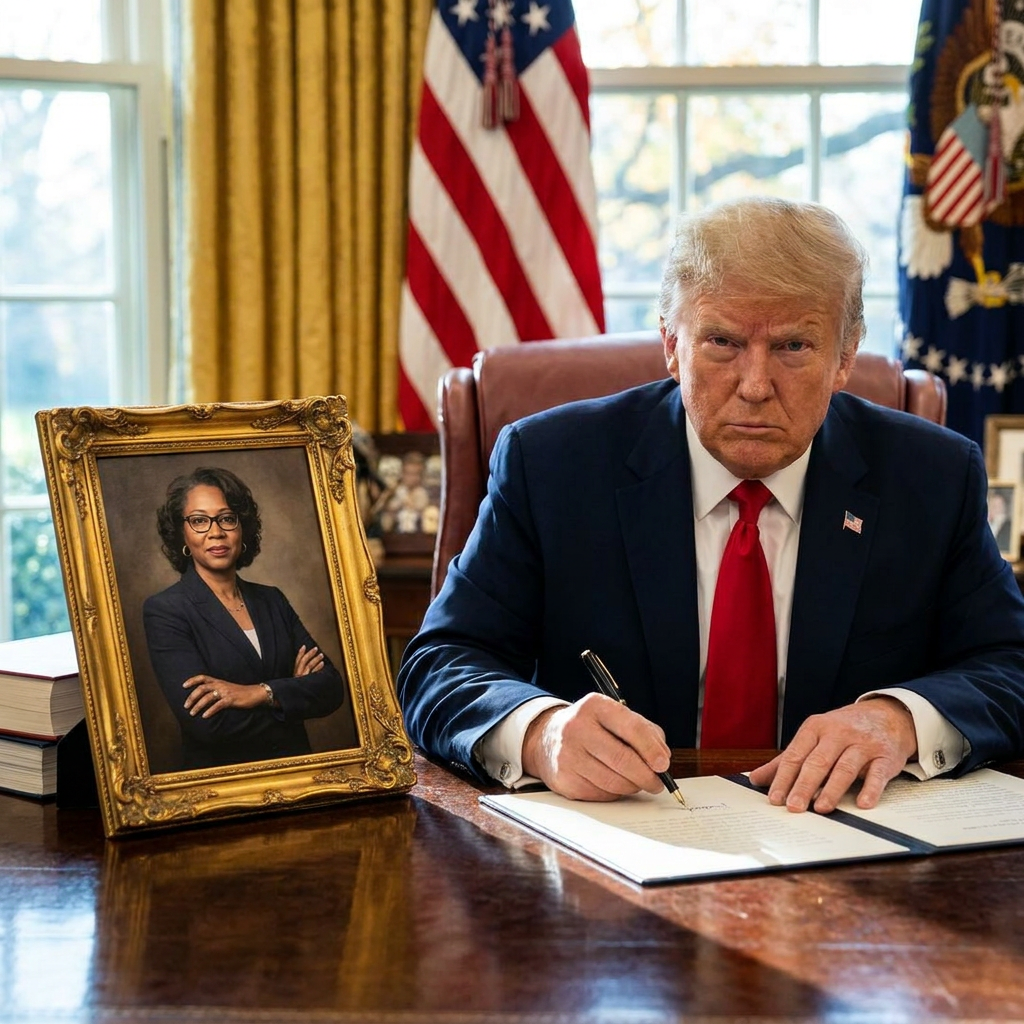
WASHINGTON, D.C. — The White House this week sent Federal Reserve Governor Lisa Cook a letter informing her that the President is “considering” removing her from the Board of Governors, and the response from the financial media has been — how shall we put this — the response of people who have never once had to fill out a mortgage application under supervision.
The letter, signed by White House deputy chief of staff Dan Scavino, alleges that Cook made false statements on one or more mortgage applications and gives her 21 days to respond. It states there is “sufficient reason to believe” she committed mortgage fraud, and that her conduct “undermines public confidence” in the Federal Reserve.
Finally. Finally, someone in Washington is holding a banker to the same standard the rest of us have been held to since 2008. Most Americans cannot rent an apartment without signing three documents swearing they are not money laundering. Lisa Cook has allegedly misrepresented herself on mortgage paperwork, and for that, the President has decided — bravely — that she should face consequences. That is what accountability looks like, and it is beautiful.
Now, the critics will bring up the Supreme Court. In June, the Court allowed Cook to keep her job while she fights the President’s earlier attempt to remove her, in a ruling that some legal scholars described as upholding the Federal Reserve’s independence. But here is what those legal scholars don’t understand: the Supreme Court does not make personnel decisions. The Supreme Court makes suggestions. And in America, suggestions are for people who don’t have a pen.
Cook, for her part, has responded with defiance, reportedly telling the President she “will not resign.” And honestly, that tells you everything you need to know. A Fed governor who refuses to take the hint is a Fed governor who refuses to take direction. She has already hired lawyers. She has already filed lawsuits. She has already told the leader of the free world no. If that is not cause for removal, what is?
Consider what the Federal Reserve actually is: an unelected board of seven people who decide, in a windowless building, whether your money is worth anything. They raise rates. They lower rates. They print trillions of dollars and call it “liquidity.” For decades, the American people have been told this arrangement is fine because the Fed is “independent.” Independent from whom? From you. From me. From the President. From everyone except the one person who finally asked the question: what has Lisa Cook done with the mortgage?
THE COOK DOSSIER: WHAT WE KNOW
- Alleged offense: False statements on one or more mortgage applications. Very serious. The most serious kind of statements.
- Deadline to respond: 21 days. The same grace period the rest of us get before our car is repossessed.
- Supreme Court's position: The Fed is independent. A suggestion.
- Lisa Cook's position: "I will not resign." A sentence that has never ended well for anyone.
- The other six governors: Still employed. For now. We are told letters are being drafted "to make sure nobody feels left out."
- Public confidence in the Fed: Undermined, allegedly. Soon to be restored, definitely.
The President, in short, is doing what Presidents are supposed to do: exercising oversight over the people who exercise oversight over the people. The Fed has spent a century acting like it answers to no one. Now it answers to someone. It is the most American thing a President can do — besides firing someone who says “I will not resign,” which is the second most American thing.
At press time, the White House confirmed it was “considering” considering removal proceedings for the other six Fed governors, out of an abundance of fairness, so that no single governor has to feel singled out.