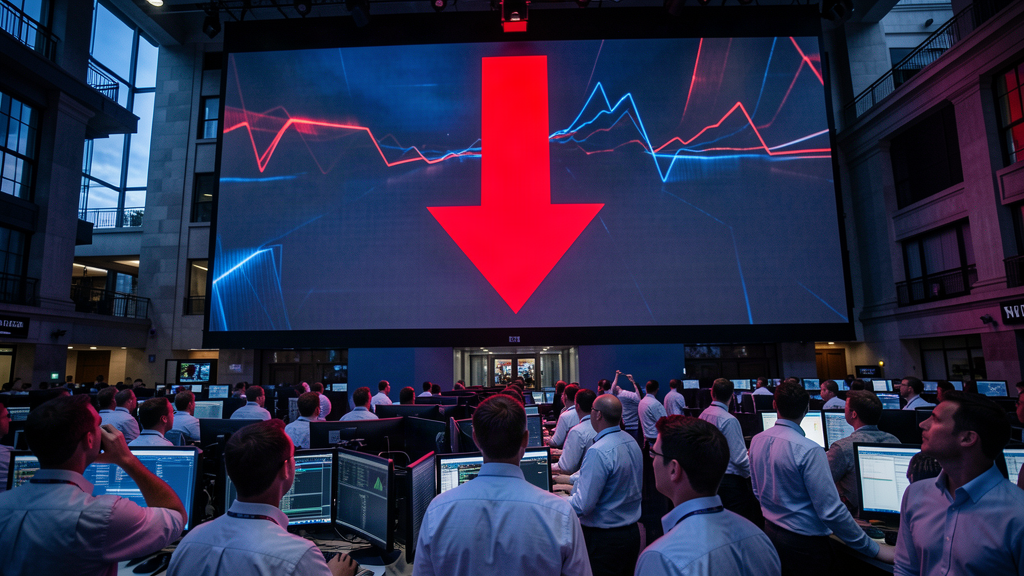
NEW YORK — For the first time in about a decade, the trading firm Jane Street lost money in a month. Sources say the roughly $15 billion July slide was tied in part to the firm’s exposure to Situational Awareness, a hedge fund founded by former OpenAI researcher Leopold Aschenbrenner — a fund, as the name suggests, built on the proposition that it would always know what was going on.
Wall Street veterans will tell you that a first losing month in a decade is not a crisis. It is a novelty. It is the financial equivalent of a beloved dynasty finally dropping a game: shocking, a little sad, and oddly refreshing.
“It’s like finding out your dad has a middle name,” said one Jane Street employee who asked not to be identified because he was not authorized to discuss the emotional journey. “I’d heard about losses. I just thought they were something that happened to other firms. Like layoffs. Or bad weather.”
Situational Awareness, which grew to $45 billion at its peak before collapsing to roughly $10 billion on falling semiconductor stocks and mounting margin calls, was forced to unwind its public stock positions in a hurry. Ken Griffin’s Citadel stepped in to buy most of the fund’s portfolio, a transaction that one analyst described as “the financial equivalent of finding a very rich person willing to take your haunted house.”
Adding to the drama: Aschenbrenner reportedly got married the same weekend the fund was blowing up, to the chief of staff of Anthropic’s CEO. Analysts have praised the timing as a demonstration that even in crisis, there is room for romance — or at least for not canceling the caterer.
“It’s actually inspiring,” said Greta Vandermeer, a portfolio strategist at a rival firm who was reached by phone while laughing. “Most people, when they lose $35 billion, don’t also get married that weekend. He did both. You have to respect the commitment to work-life balance.”
THE $15 BILLION TUTORIAL: A BEGINNER'S GUIDE TO LOSING
- A loss is when the number at the end of the month is smaller than the number at the beginning.
- Jane Street had not seen one of these in approximately ten years; employees reportedly Googled "what is a loss" and were directed to other firms' earnings reports.
- The fund that caused it was named "Situational Awareness," which means the situation was aware of nothing.
- Still, the firm has generated over $40 billion in trading revenue this year, so the $15 billion is, by Wall Street standards, a coupon.
- Note to readers: a coupon in this context is not a good thing.
Economists note that Jane Street’s pain is a reminder that even the most sophisticated trading firms can be surprised by a fund with an ironic name. The Securities and Exchange Commission has reportedly opened a review into whether “Situational Awareness” was, at any point, situationally aware.
Some say the $15 billion loss proves the AI trade was overhyped. Others say it proves that even smart money can get married on a bad weekend. The truth, as always, lies somewhere in the margin call.
At press time, Jane Street was reportedly planning to frame its July statement and hang it in the lobby, “so we never forget what it looks like.”