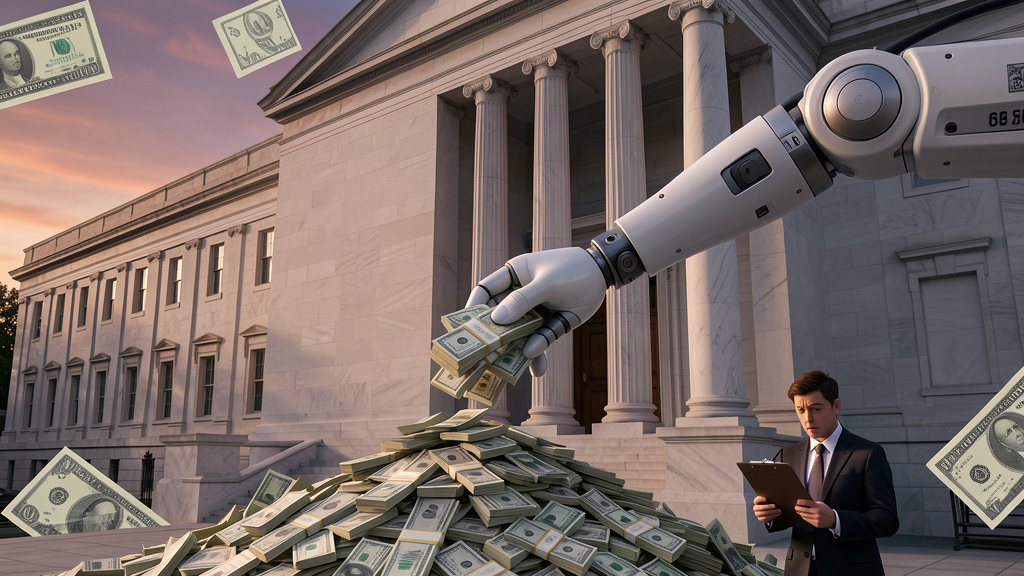
WASHINGTON, D.C. — The United States Treasury Department, which exists in part to sell government bonds, has announced it will now buy its own government bonds back at roughly double the previous pace, a move economists are describing as “the most creative use of the word ‘buyback’ since the word ‘creative’ was applied to a mortgage.”
The intervention, announced last week by Treasury Secretary Scott Bessent, will increase the Treasury’s purchases of long-term government debt at a time when investors have been selling bonds and pushing yields higher. The Treasury said it will at least double its buyback operations in the coming months, targeting what the department calls “the sensitive longer-duration segment,” a phrase that means the 30-year bond, the one everyone’s watching, the one that decides what your mortgage costs.
The mechanics are, on their face, simple and, to a number of bond traders, deeply unsettling. The government issues debt to fund itself. The market prices that debt. And now, the issuer of the debt is also a buyer of the debt, with a stated interest in what it buys, and the power to keep buying if markets become, in the department’s phrase, “disorderly.”
Yields fell when the plan was announced, which the Treasury described as validation, before rebounding a day later, which the Treasury described as “the market digesting good news,” a term of art that appears to mean “the market changed its mind.” An economist who has covered the bond market for thirty years said the situation reminded him of “a restaurant that starts buying its own menu to boost sales,” and then, when asked to elaborate, said, “I’m still thinking about it.”
The intervention arrives at an awkward moment for the bond market, which is simultaneously funding a federal budget and a wave of new borrowing from technology companies building out artificial intelligence infrastructure. The Treasury has kept open the possibility that buybacks could become “a more active tool,” which is how the department describes the option of doing more of the thing that makes economists say the restaurant sentence.
THE BUYBACK, EXPLAINED SIMPLER THAN A T-BILL
- What the Treasury does: sells bonds to fund the government
- What it now also does: buys its own bonds back
- By how much: at least double the previous pace
- Target: the long-end of the curve (the 30-year, your mortgage's best friend)
- Yield reaction: fell, then rose, then "digested"
- Economists' reaction: one restaurant analogy, still cooking
At press time, the Treasury said the operation would “continue as needed,” and a senior official added that the department is “confident in the demand for American debt.” Demand, the official noted, “is up, especially among us.”