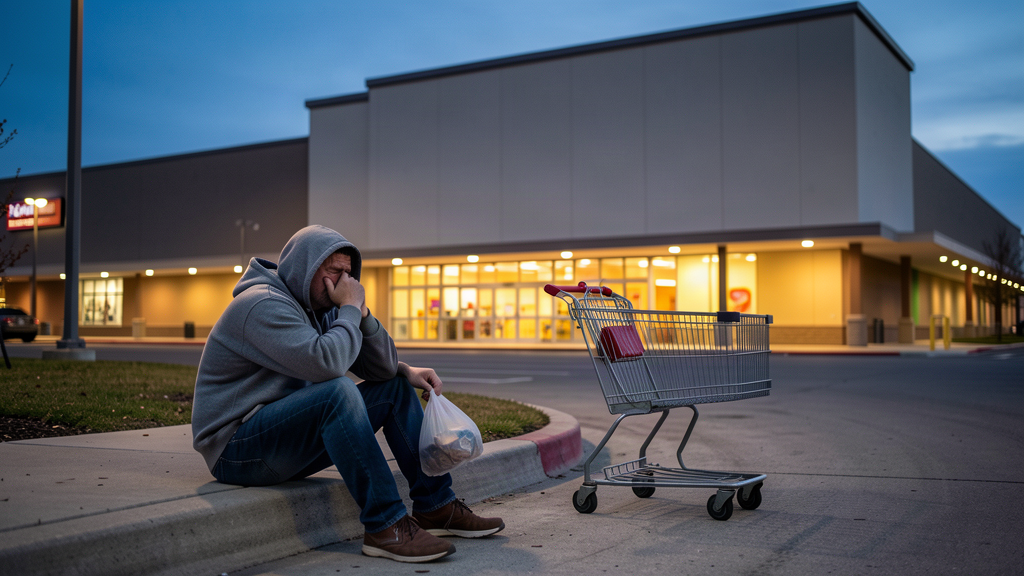
WASHINGTON — For decades, the American consumer has been the most reliable engine in the economy, chugging through rate hikes, pandemics, and at least one genuine financial crisis without a complaint. This month, the engine made a decision, and that decision was “no.”
Retail sales fell 0.6% in July, the Commerce Department reported Friday, down from a 0.2% gain in June and marking the steepest drop since May 2025 — and it missed what economists had expected, which was, in the economy’s current state of mind, a small victory in itself. Consumer sentiment, meanwhile, fell about 8% to a preliminary reading of 51, ending a two-month streak of rising confidence. Both reports came in worse than the consensus, which is the economist’s way of saying “we were all wrong, but we were politely wrong.”
The reason the numbers matter, and why the word “fatigue” is now doing a lot of heavy lifting in financial commentary, is simple: people’s dollars account for about two-thirds of economic growth. When the consumer rests, the whole machine rests with it.
The details, as always, are where the story lives. Sales at gasoline stations fell 0.9% in July, coinciding with the drop in energy prices — and even after stripping out gas, retail spending was still down 0.6%. The core measure, which strips out the volatile categories, fell 0.44% against a 0.4% gain economists had projected, which is the difference between “the consumer is fine” and “the consumer is taking a wellness break,” and this month it’s the second one.
What the consumer did, and did not, buy is the most revealing part. Online sales fell 2.2% — the biggest decline of any category — which means that for the first time in its reign as shopping’s overlord, the internet has been told “no.” The algorithm blinked. Car dealerships were down 2%, a sign that the American driver has decided that a car is a lifestyle choice, not a necessity. And restaurants and bars climbed 0.5%, which is to say that the consumer did not stop eating. The consumer simply redefined where value lives: on a plate, not in a shopping cart.
The timing, for those keeping score, is also worth noting. Some of the pullback, Heather Long noted, is due to Amazon Prime Day, Walmart+ and Target Circle deals happening in June — meaning the American shopper had already front-loaded a month of spending in a single weekend and arrived in July in what economists are now calling “a period of reflection.” “Even with lower spending on gas in July,” Long said, “consumers weren’t eager to spend elsewhere,” which is the most important sentence in the report, delivered with the kind of restraint that suggests she has seen this before.
The survey work adds texture. University of Michigan survey director Joanne Hsu found a pervasive “belief that high prices will continue to be burdensome,” and said the drop in sentiment was “pervasive across various demographic groups” — a rare moment of national agreement, in which both parties, independently and without consultation, concluded that prices are a burden. The shopping boom of recent years, it also turns out, was a regional phenomenon, concentrated among wealthier consumers whose stock-market portfolios had, in the words of one analyst, “done a lot of the spending.”
None of this is a recession. None of this is a crisis. It is, in the words of the report, a consumer that is “showing signs of fatigue” — which is the healthiest development in consumer economics in years, because the American shopper, long the subject of relentless commercial persuasion, has finally learned the most important word in the English language: maybe.
CONSUMER FATIGUE: WHAT'S ACTUALLY FATIGUED
- Retail sales, July: -0.6% (a personal best for calm)
- Online: -2.2% (the algorithm has been told "no")
- Car dealers: -2% (the American driver is taking the bus)
- Restaurants and bars: +0.5% (the only category still "in")
- Consumer sentiment: 51 (down 8%, "pervasive across demographic groups")
- Caffeine consumption: unchanged (the fatigue is real; the coffee is not)
At press time, Navy Federal’s chief economist had begun recommending “a national shopping sabbatical,” and the Commerce Department confirmed the August report would arrive on schedule — “when the consumer is ready.”