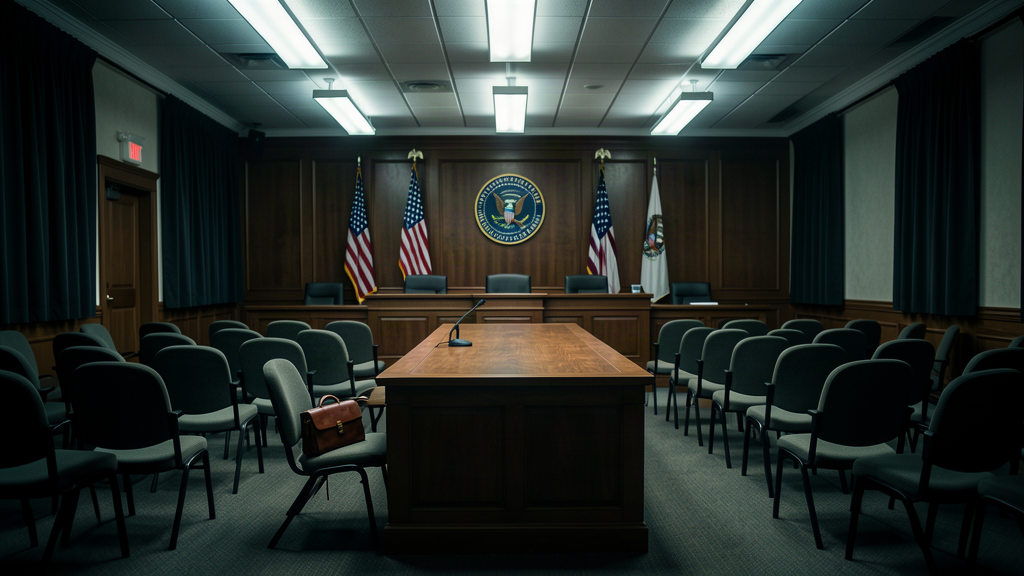
WASHINGTON, D.C. — The House voted Wednesday to hold billionaire investor Leon Black in contempt of Congress for refusing to sit for a deposition in the committee’s investigation into Jeffrey Epstein. The deposition was scheduled for the first week of September. It did not happen. The chair, as NPR documents, and as at least one photograph confirms, has been empty ever since.
The contempt vote is the closest thing the American legal process has to a formal mechanism for saying a man has declined to say a thing, and then putting that declination to a vote. The House put it to a vote. The vote passed, per CNBC, along the lines the committee’s own calendar suggested it would, which is to say the vote was not, in any meaningful sense, in doubt.
Black’s position, which his lawyers have now filed, described, and, in the specific, defended, is that he has already produced “the only confidentiality agreement in which Epstein could have been involved.” That is the full answer to the committee’s request, which, on the record, asked for more than one. The Guardian reports his lawyers called the subpoena “overbroad,” a word that has become, in this investigation, the load-bearing structure of every answer, every filing, and every press release.
He has also, on the record, said he never engaged in sex trafficking, never paid Epstein for access to women, and was never blackmailed by Epstein. Three denials. A legal scholar, upon reading the statement, described it as, in her words, “complete.” The committee, which had been calling for the contempt vote since the first missed deposition, accepted the statement, reviewed it, and then voted.
THE CONTINUING PROCEDURE: STATUS REPORT
- The subpoena: issued, acknowledged, and, per the recipient's lawyers, "considered."
- The deposition: scheduled, then, per the scheduling office, "unscheduled."
- The lawsuit: filed by the witness against the committee, seeking to litigate the subpoena. The process now has a process.
- The contempt vote: passed. It authorizes the committee to ask the Justice Department for an indictment, which, for now, the committee has chosen not to do, on the grounds that the vote is, itself, a thing.
The practical effect of a contempt vote against a man of Black’s approximate wealth is, as it has been in the handful of other cases, uncertain. The Justice Department can prosecute, or it can not. The witness can appear, or he can not. The empty chair, at this point, is the most stable element in the proceedings. The committee’s own schedule lists it as “the deposition room.”
At press time, the committee said the deposition is still scheduled. When asked when, it said “as soon as possible,” which the scheduling office confirmed is, on this committee’s calendar, a date.