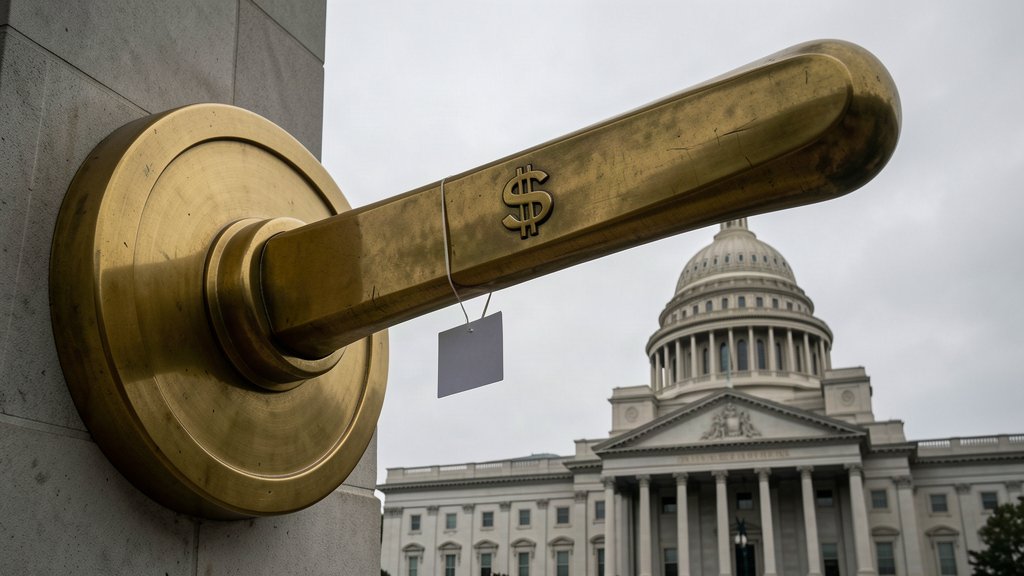
WASHINGTON, D.C. — The President has threatened to halt trade with any country that runs a trade surplus with the United States unless the Federal Reserve cuts interest rates, a position that economists have described, in the specific, as “not a policy,” and, in a follow-up, as “we’re not sure it’s a sentence, either.”
The threat, issued Friday and, as is standard, escalated on Saturday, was aimed at the September decision the Fed is preparing to make. The logic, as laid out by the administration, is that if enough countries stop doing business with the United States, the Fed will be “moved,” in the way that the Fed is moved by things, which is to say not, and which has not, historically, moved it in the direction anyone has wanted, including, in the specific, the people who keep wanting it to move.
The Fed, for its part, has not commented, which is the standard response, and which is, in the specific, the correct one. The markets, which do comment, are pricing in a range of outcomes that includes, as one strategist put it, “the President being right, which is a thing that can happen,” and, as another put it, “the Fed being right, which is a thing that happens more often, and less loudly.”
The trade-surplus angle is the new element. The countries that run a surplus with the United States are, in the specific, the countries that sell more to the United States than they buy, which is, in the specific, the entire point of a trade surplus, and which is, in the specific, not something a trade surplus can be used to punish the Federal Reserve for, but which, in the specific, is the argument.
THE LEVERAGE, AS DESCRIBED BY PEOPLE WHO DO THE MATH
- Friday: The President threatens to halt trade with surplus countries unless the Fed cuts rates.
- Saturday: The threat is escalated. The Fed does not move. The markets move, in the way markets move, which is to say by pricing in doubt.
- The surplus countries: Not, as of press time, consulted, and not, as of press time, in a position to be consulted.
- The Fed: Independent. That is the word. That is the whole of it. That is the part that has, in the specific, been left off the sentence.
The historical record of using trade policy to influence interest rates is, in the specific, short. It is also, in the specific, a record that did not go well, in the specific, the way that records that involve a lot of countries and one very loud phone call do not go well. The economists who have studied it have used the word “unprecedented,” which, in the economics world, is a word that is used when the next thing that happens is, in the specific, the thing that is about to happen, and which, in the specific, is the part that is left for the next paragraph.
At press time, the September Fed decision was still scheduled, the trade threat was still on the table, and the countries with the surpluses were, in the specific, still selling, which is, in the specific, the part of the sentence that no one has, in the specific, figured out how to resolve.