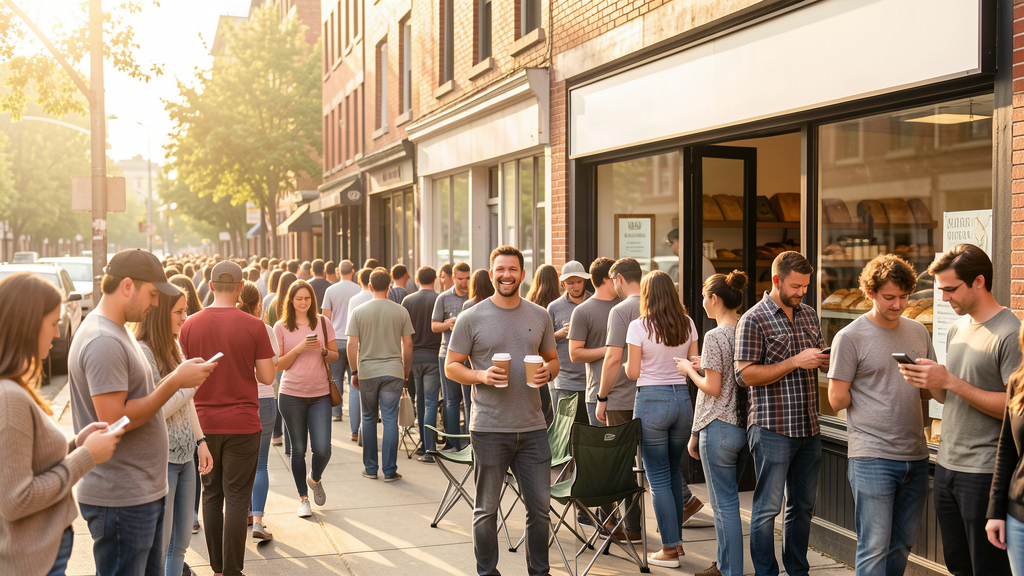
NEW YORK — America has invented a job title that sounds like a punchline and pays like a profession: the professional line sitter, a person whose entire skill set is standing still, on purpose, for money, outside a store that sells a donut.
The industry, long a New York curiosity, is booming. Line-sitting companies report demand for everything from the cronut to the viral dot cake, and one veteran line sitter explained the economics plainly: a customer pays for the wait, the sitter provides the standing, and both parties walk away with exactly what they came for, which is a pastry neither of them waited for.
The service works like this. You want the thing. The thing requires four hours. You hire a man named Darius, who arrives at 4 a.m., sets up a folding chair, and becomes, for the price of a used motorcycle, the line. When your pastry is ready, Darius hands it to you, stretches his hamstrings, and goes home. It is the purest transaction in the modern economy: money for time, time for sugar, sugar for a photograph.
Patrons defend the system with the total sincerity of people who have done the math. A line sitter costs forty dollars. A workday costs more than that. Therefore, the logic goes, standing in line is the expensive choice, and paying someone else to stand is simply good business, the same reasoning that produced the butler, the valet, and the man who holds your parking spot in Manhattan.
LINE-SITTING: THE TARIFF CARD
- Hourly rate: roughly $20–$40, which is less than the pastry costs when you factor in your own salary
- Peak demand: 3 a.m. to 6 a.m., the golden hour of the line sitter, a time most Americans reserve for regret
- Equipment: folding chair, phone, thermos, and the specific calm of a man who has nowhere else to be
- Refund policy: none, because the line was stood, and the standing cannot be unstood
Bakers, for their part, are thrilled. A line is marketing that pays its own rent. Some shops now keep a list of regular sitters, the way restaurants keep a list of regulars, and one Brooklyn bakery has reportedly begun greeting the sitters by name and offering them the day-old goods, a gesture the industry calls “the tip” and the sitters call “the only part of the job with a dessert in it.”
At press time, a line-sitting company had announced a premium tier: a sitter who not only holds your place but also tells you, on the phone, exactly how the line is feeling, hour by hour, like a weather report for hunger.