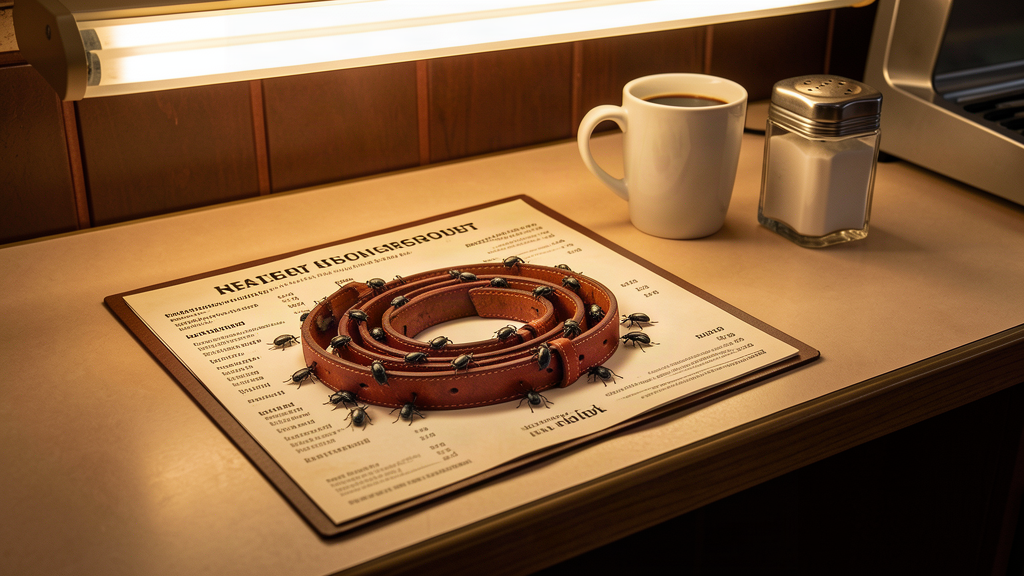
DENVER — A nurse went to a Jamaican barbecue pop-up for lunch on a Tuesday, the way nurses do when it is a Tuesday and there is a pop-up, and she pulled out the menu to look at the options, and she put the menu down. The meats, as pictured, resembled, in her words, “leather belts crawling with beetles,” and the rest of the plate had a texture that she could not, in the words of the nurse, “reconcile with the concept of a bird.” She ordered the chicken and the macaroni and cheese anyway, because it was one of her only lunch options. The food, she reported, was fine. The picture was not. The food was fine. The picture had crawled.
The picture had crawled because the restaurant, whose manager confirmed using ChatGPT to create the menu visuals instead of hiring a graphic designer, is like a growing number of small restaurants that cannot afford a food photographer, which is to say the restaurant had made the decision that every small restaurant is making, which is the decision that the picture should cost less than the food, which is the decision that the picture should cost nothing, which is the decision that the picture should be made by a thing that has never, in fact, made food, and therefore has no idea what food looks like, except for the part that is, somehow, a leather belt.
The pop-up’s owner, who asked not to be named for the reason that the owner is, in fact, the person who ordered the belt, said the generator had “saved us a lot of money,” which is true, and had “given us a professional look,” which is true in the way that a leather belt is a professional look, and had “not been a problem until a nurse posted it,” which is to say the belt had been a problem the entire time, and the nurse had simply been the first person to say so, out loud, with a photo, which is to say the belt had been a problem the entire time, and the photo had simply made it a public problem.
The public problem is, in fact, a phenomenon, and the phenomenon is, in fact, a thing. Restaurants, cafés, and bodegas are quietly filling their menus and delivery-app pages with AI-generated images, because the images are cheap, and fast, and for a lot of owners juggling rent, staffing, and razor-thin margins, the tradeoff felt worth it, until the images started to come back wearing the texture of reptile skin, or the shape of a belt, or the particular arrangement of small dark things that a person who has eaten ribs would recognize, at a distance, as not ribs. The images are, in the words of the people who are losing their appetites over them, “nightmare fuel,” and “the restaurant red flag that will keep people away,” which is to say the images are doing the job the food is supposed to do, which is to make the food look like food, and they are doing it in the way that a thing that has never made food makes food look like food, which is to say like a belt.
THE SLOP MENU, A SCOREBOARD
- The photo: Jamaican ribs, as pictured
- The resemblance: a leather belt crawling with beetles
- The cost of the photo: $0, generated in roughly the time it takes to order the belt
- The cost of the food: a normal amount, for food that is, in fact, fine
- The nurse's verdict: "the food was fine. The picture had crawled."
- The restaurant's verdict: "it saved us a lot of money"
The chef, who had not, in fact, generated the belt, said the ribs on the plate were “the same ribs,” and had been “the same ribs” for the entire time, and that the belt had been “in the menu the whole time,” and that he had, in fact, not looked at the menu in a while, because the menu was not, in fact, the ribs, which is to say the belt had been in the menu the whole time, and the ribs had been on the plate the whole time, and the two had been, in fact, different things, which is to say the belt had been a problem the entire time, and the photo had simply made it a public problem.
At press time, the nurse’s post had been seen by a number of people, the pop-up had taken the belt down and replaced it with a photo of the actual ribs, and the actual ribs, it turned out, looked like ribs, which is to say the belt had been, in fact, a thing that had been in the menu the whole time, and the ribs had been, in fact, a thing that had been on the plate the whole time, and the two had been, in fact, the same ribs, which is to say the food was fine, the picture had not crawled, and the belt had, for the first time, been a thing that was not on the menu.