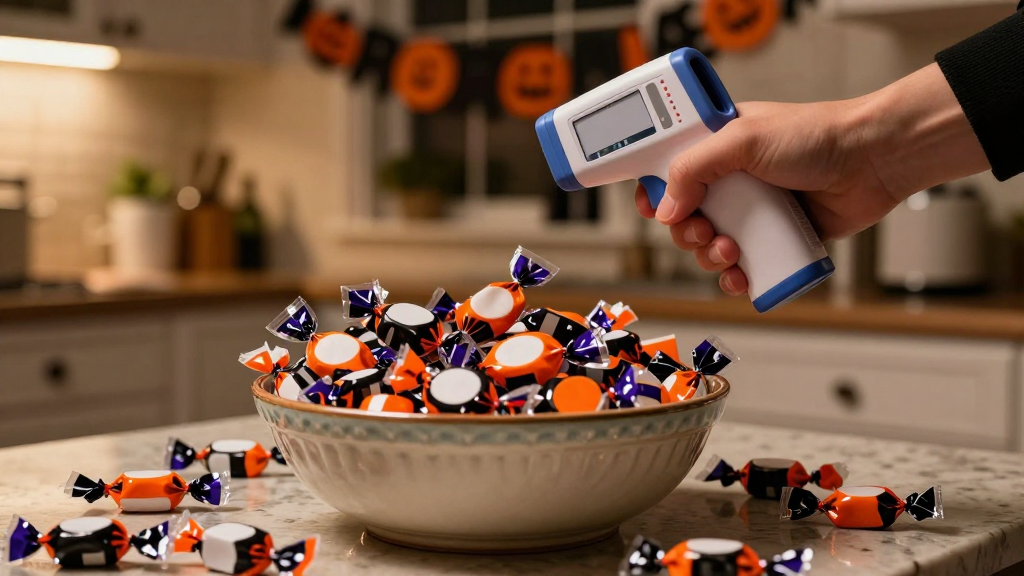
The bowl was on the counter in Orlando, and by Thursday night its own mother was pointing a thermometer at it.
Denise Okafor, 38, bought the candy at a drugstore in September and has been guarding it since the Florida Department of Health re-circulated its finding, from a testing program begun this January, that arsenic was detected in 28 of 46 candy products it sampled. Toxicologists have spent the Halloween season dismantling the numbers, complaining that the state never released its full methodology, and one toxologist on local television suggested the state had effectively tested the dirt under the candy.
“The candy’s fine,” said Dr. Arlene Mast, a food chemist who tested samples of her own nephews’ haul and found them boring — the highest compliment available in her field. “The dyes are the dyes. The arsenic is the arsenic that has always been in the air, in the water, in rice, in everything, at levels that require you to eat a bathtub.”
Which is how the candy scare became, briefly, the only food story anyone could find — even as, in the same news cycle, the USDA was completing a recall of 1.58 million pounds of bacon, hot dogs, and deli meat from a Massachusetts plant whose refrigeration apparently lost an argument with a room. The recalled meats are described in the recall language as having experienced “temperature abuse.” The meats did not abuse anyone. The meats were warm. A retail customer noticed on October 1 that product arrived at a store “warm,” and the machinery of federal food safety then did what it does: it wrote a memo, then a recall, then a list of Walmart and Stop & Shop SKUs that reads, on a Friday afternoon, like a Thanksgiving invitation from a rival.
“I sold the Foot-Longs for eleven years,” said Vic Panepinto, 64, who runs a delicatessen in Chelsea, Massachusetts, three blocks from the recalled plant’s front gate, and who declined to name his own supplier but confirmed, with the air of a man being asked if he breathes air, that yes, he has noticed the recall. “People come in scared. They want the turkey breast that’s cold. We sell them cold turkey breast. It’s the same product from a different room. That’s the whole industry right there — same sandwich, different room.”
Public-health officials used the week’s confusion to urge one actual behavior: if your refrigerated meat arrives warm, or your deli counter smells like a plant on a July afternoon, do not eat it, and also, tell someone.
Ms. Okafor’s children received their full candy allotment Friday afternoon. The thermometer went back in the junk drawer next to the flashlight that works and the other flashlight that does not.