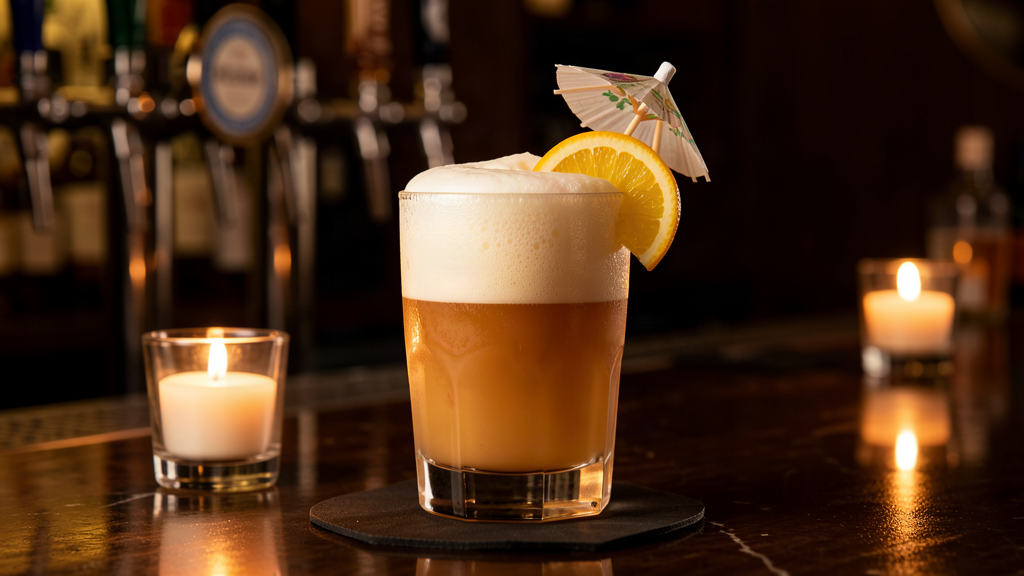
Nobody announced it. There was no press conference. But somewhere between the first and second week of October, the average mocktail in this country quietly cleared fourteen dollars, and now bars all over the city are selling soda water with ambition, and the ambition is doing the pricing.
The context is Sober October, the month in which tens of thousands of people nobly do not drink, a tradition imported from Britain, where it began as a charity challenge for cancer prevention and evolved, as all British inventions do in this country, into a menu.
“I take off the label and I put on a little umbrella. That’s twelve dollars right there,” says Marco Delaney, eleven years behind the stick at a cocktail bar in the arts district, demonstrating the business model of the season with the candor of a man who has stopped pretending. His Saturday mocktail list runs to eight items. The cheapest is a “seedlip highball” at eleven dollars. “People pay it happily,” he says, almost resentfully. “They pay it with a tip.”
The numbers explain the moment, even if they don’t explain the prices. According to a survey from Oar Health, only about 30 percent of monthly drinkers have even heard of Sober October — about half as many as know its January cousin — and most people who do the challenge keep it to themselves, which is the behavior of a person who suspects the emperor is, in fact, out of beer. And market researchers at NIQ found that 93 percent of people who buy non-alcoholic drinks still also buy alcohol. The non-alcoholic beverage aisle is not a replacement lifestyle. It is a Tuesday.
Ask a doctor and they will tell you the liver is the least complicated organ in the body: it forgives everything. “My liver is thrilled,” says Dr. Renee Whitaker, a gastroenterologist in Toledo, describing October in her practice. “For the first time in my career, patients are sending it flowers. It doesn’t understand why. I don’t either, but the appreciation is mutual and it’s working out.”
Ask a pub owner and you get economics. “October is the month the regulars pay full price for tap water with a story,” says Linda Okafor, who runs three pubs and has noticed that a cucumber garnish adds $4.50 of perceived value, an exchange rate she did not set but has chosen to honor. “A man told me last week the tonic tasted like a spa. He paid fourteen dollars for a spa. I serve it in a glass I used to charge nine for gin in.”
Ask a teenager, because this reporter asked a teenager, sitting uninvited at the end of a bar with a virgin margarita. “It tastes like a cucumber had a spiritual experience,” says Jayden Marsh, seventeen, getting his first look at adult pricing. “My dad pays eight dollars for the real one. I feel like I won.”
The great trick of Sober October is that nobody is being fooled and everybody is participating. The drinker gets the ritual without the regret. The bar gets the regular without the liability. The mocktail industrial complex — Athletic, Seedlip, and the rest — has spent five years making the soda genuinely good, and the bars have responded by making the soda genuinely expensive, which is the oldest trade in America: improvement, followed immediately by markup.
At 6 p.m. on a Tuesday the bar was full. Everyone was holding a glass of something fancy and clear, nobody was admitting anything, and Marco was behind the stick, putting an umbrella in a twelve-dollar soda water, one more time.