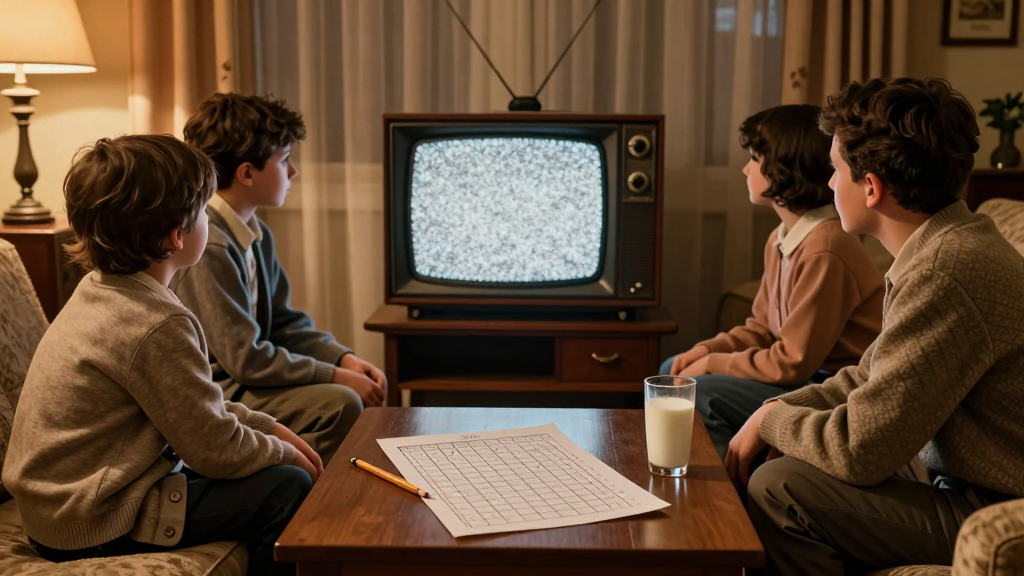
In November of 1966, my uncle Homer kept the county returns for an entire Senate race on a paper plate, using a system of his own invention: a dot for one party, a dash for the other, and a small circle for anything he found interesting, which turned out to be mostly weather reports from WBZ.
Homer was not an election official. He was a machinist with a transistor radio and the conviction that the networks were too slow to be trusted and too loud to be ignored. When the returns came in from the town meetings, county clerks read the numbers to anyone standing close enough, and the networks, when they finally read them, read them in the voices of men announcing ships. Homer got there first anyway, and by nine o’clock the plate was full, and by nine-thirty he had called the race, and he was, as far as our family was concerned, the race’s final authority.
I think about that plate tonight, because tonight America has built the opposite of it. We have more information about this election than any electorate in human history — millions of early ballots tallied, models humming, prediction markets twitching — and the honest forecast from everyone who counts for a living is that we may not know some of the answers until next week, and some until Thanksgiving, if the counting develops a personality.
People complain about this the way people complain about weather. But consider what the waiting is actually made of. It is made of clerks checking signatures at midnight. It is made of volunteers feeding paper through machines in school gymnasiums, and of provisional envelopes opened in the presence of representatives of both parties, arguing pleasantly over coffee that has gone cold. It is slow because it is careful, and it is careful because — whatever else this country has been — it has taken seriously the strange business of deciding things this way.
Homer’s plate was fast because it was his. Ours is slow because it is everyone’s, and everyone, it turns out, takes longer. The dot-and-dash system would not survive contact with a lawyer, and the transistor radio would not survive contact with a lawsuit. What survives is the boring machinery, running overnight, on a Tuesday that has become a week.
My advice, for what it is worth, is the advice of a man who has watched sixty years of these nights: go vote if you have not. Then eat something you did not cook. Then sleep, because the counts will be there in the morning, moving at their own dignified speed, and you will want to be rested for the part of the week where the numbers finally start acting like news.
The radio still works, at any rate.