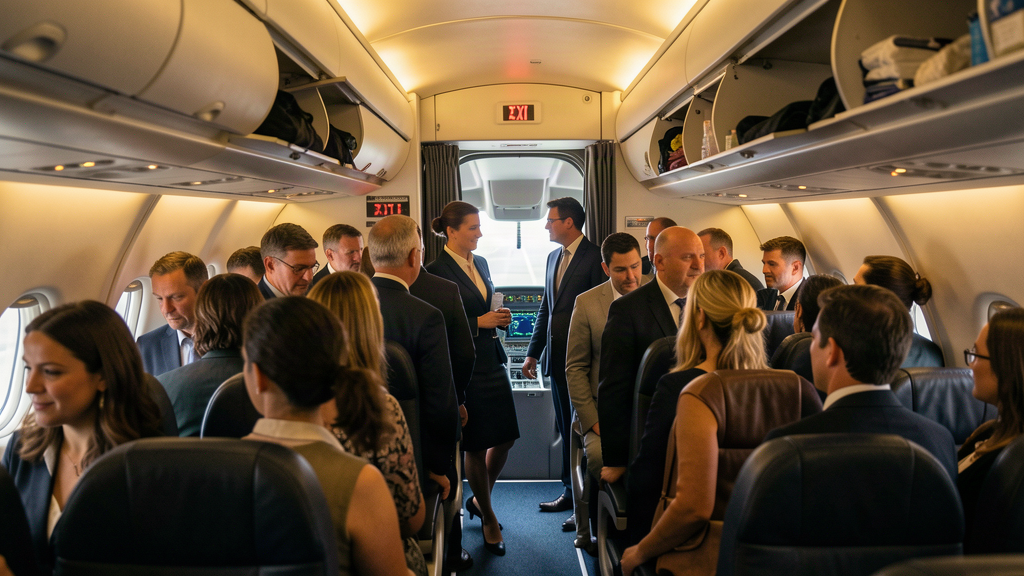
WASHINGTON — A flydubai 737 bound for Tel Aviv descended nearly 14,000 feet in under thirty seconds on Wednesday, and the situation was resolved when the passengers went into the cockpit and handled it, which is the kind of story that makes people uncomfortable, because it suggests that the ordinary American — the ordinary human — is perfectly capable of walking into a room and fixing a problem on the first try.
The uncomfortable part is not that passengers acted. The uncomfortable part is that they acted well, and did it in the aisle, in a seatbelt sign, without a manual. Emergency codes were raised over Saudi Arabia; the aircraft fell; the group in the cabin decided, collectively and in about thirty seconds, that the plane would land. It landed. Everyone on board survived.
Some say the passengers should have waited for the professionals. Others say the professionals were the problem. The truth, as always, lies somewhere in a third position I just invented: the professionals were in the cockpit, and the cockpit was the problem, so the professionals were, by definition, unavailable, and the passengers were the only professionals left.
We spend enormous money training people to handle emergencies, and then we put those trained people in a room with a locked door and seat them in row 14 with a ginger ale. The passengers are told to stay seated. The passengers, when it mattered, stood up. That’s not insubordination. That’s judgment, and judgment is the one thing the training never covers.
THE CABIN, RATED
- The descent: Nearly 14,000 feet in under 30 seconds — a number that reads as an accident and behaved as a decision.
- The response time: Roughly thirty seconds from the drop to the aisle, which is faster than any committee in Washington has ever moved on anything.
- The credential: None. Every passenger held only a boarding pass, and every passenger used it.
- The outcome: Everyone survived, which is the only metric the FAA has ever actually cared about.
At press time, the investigation continues, and one passenger — a retired maintenance supervisor from Ohio who described himself as “the guy who reads the placard on the plane anyway” — has been informally awarded the highest honor available to a civilian: he is now the person his family calls first when something goes wrong in the house.