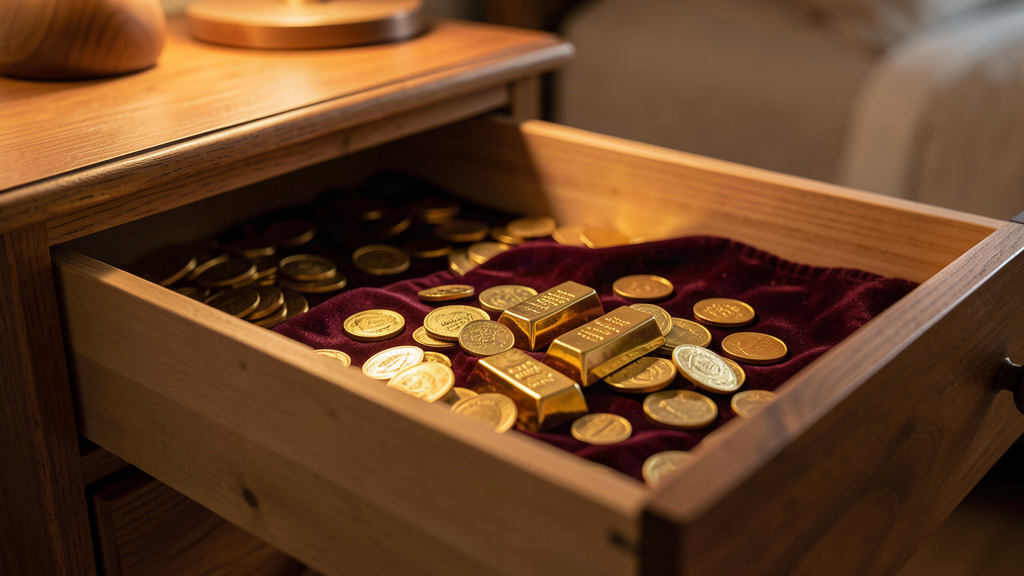
ISTANBUL — In Turkey, gold is given at almost every moment that matters. A wedding. A birth. A name day. A promotion that was a little too modest to warrant a raise and a little too large to ignore. And then, after the congratulations, the gold goes into a drawer, and it stays there, sometimes for decades, doing exactly what gold does, which is nothing, until the economy gives it a reason to do something.
Now the government is concerned. Officials have begun, with the careful delicacy of people who are about to ask for something back, to note that all this gold sitting in private drawers is, in their view, “hurting Turkey’s future.” The framing is worth sitting with. The country’s most reliable savings habit is, by this account, a macroeconomic problem, and the proposed remedy is to talk the citizens into moving it.
The government is not asking for the gold. It is asking for the gold to be in the economy. Spent, lent, invested — anything that shows up in a statistic. The drawer, in this telling, is not savings. The drawer is inefficiency.
To the outside observer, this reads like a strange argument. But it is not strange to a family that has watched the lira move the way it has. The gold in the drawer is not a position. It is ninety years of inflation, distilled into a single drawer and handed down at a wedding. Turks have used gold as a hedge against the country’s volatile economy for so long that the habit is itself a kind of institution. The central bank, for its part, has never had a relationship with that institution. It has been, at best, a landlord.
GOLD IN TURKEY: BY THE NUMBERS
- Gold is gifted at nearly every major life milestone — weddings, births, name days
- A meaningful share of household wealth sits as physical gold, stashed at home
- Officials now describe the hoarding as a drag on the country's financial future
- The central bank's stated goal: get the gold "out of the drawer and into the economy"
- The drawer's response, per the women interviewed: it has outlived four presidents
A woman interviewed for the piece said she would not be selling. Her gold, she said, had “outlived four presidents and three currencies,” and was “not leaving for a few interest points.” This is, of course, the strongest possible economic argument, and the government does not have a rebuttal for it. The rebuttal would have to be a stronger promise of stability, and the stability has, historically, been the one thing the drawer has not needed.
What the government is really asking, in other words, is for trust. It wants the gold in the economy because a gold in the economy is a gold that shows up in a report, and a gold that shows up in a report is a gold the government can pretend to manage. The gold in the drawer shows up nowhere, which is exactly why the family trusts it.
At press time, a government economist described the national goal as “getting the gold out of the drawer and into the economy,” and then compared the task to “convincing a cat to leave a sunny spot.” He was asked whether the cat had ever, in his experience, left the sunny spot. He said he had not, and that he was “optimistic about the policy, if not the cat.”