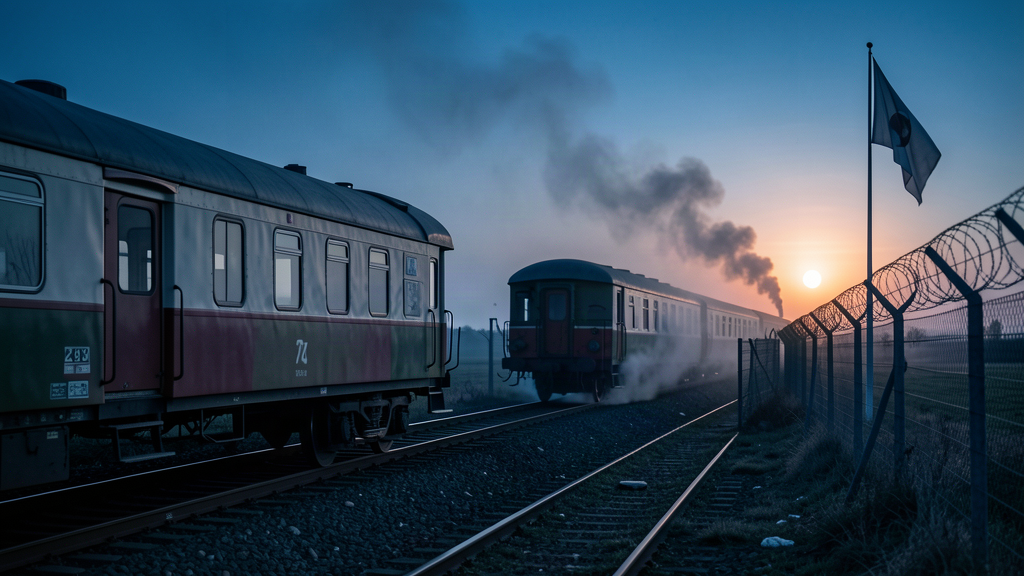
WARSAW — A Russian drone struck a train traveling near the border between Ukraine and Poland this week, and the two countries, along with the alliance they both happen to belong to, produced a single coordinated response: a word, and then, a little later, a promise to make the border stronger.
The strike, which hit a rail line close to the Dorohusk border crossing as a group of former Western officials were traveling out of the country, was, in the words of one defense analyst, “an escalation,” and, in the words of Poland, “something we will not repeat.” The distinction between those two sentences is the entire article, so let us spend the rest of it inside it.
Two of the drones landed within a kilometer or two of Polish territory, which is, for a country whose eastern border is the entire argument, the exact number that matters. Poland has now pledged to strengthen security along the frontier, which is the phrase the country has been working toward for a year and was, per one official, “ready for the moment it arrived.” The report on the pledge makes clear that the strengthening is, in the specific, a border that is about to get more of everything.
NATO Secretary General Mark Rutte, who was in the region when the strike landed, vowed more support for Ukraine, which is, analysts note, the sentence the alliance has been drafting since February of last year and is now, finally, able to say out loud. The details of the strike put the incident in the context of a wider pattern of attacks along the frontier, a pattern that, per one Polish official, “has a name now.”
The word, it turns out, is the part everyone is agreeing on. Poland, Ukraine, and NATO all have a name for the incident. Poland’s name is “strengthening.” Ukraine’s name is “escalation.” NATO’s name, which the alliance published at the same time as the other two but in a different font, is “we see it.”
The former officials who were on the train when it was struck are, per a spokesperson, “unharmed and, in the specific, out of the country,” which is the outcome every side of the border is now describing as the best available one. A train, a drone, and a border crossing, all within a kilometer of one another, is, per one logistics expert who has studied the region for a decade, “the kind of thing you plan for, and then, afterward, you describe.”
THE INCIDENT: AS REPORTED, IN THE ALIGNED VERSIONS
- What was hit: A train, near the Dorohusk border crossing, with a group of former Western officials aboard
- How close: Two drones landed within a kilometer or two of Polish territory, which is, for a border, the inside of the conversation
- Poland's response: To strengthen security, a phrase the country has been "ready for" and is, per the schedule, now executing
- NATO's response: More support, a sentence the alliance has been drafting since last winter and is, per Rutte, now finished
- The passengers: Unharmed, and, in the specific, out of the country, which every side calls the right outcome
A European security scholar who has written about the border for longer than the border has been a border put it plainly. “The drone did not decide anything,” he said. “The border was already the argument. The drone just gave the argument a timestamp.”
At press time, Poland had begun the strengthening, NATO had finished the sentence, and the train line, which was, per a rail spokesperson, “already being rerouted,” was, for the first time in the history of the line, a thing that people would remember by the date it was struck.