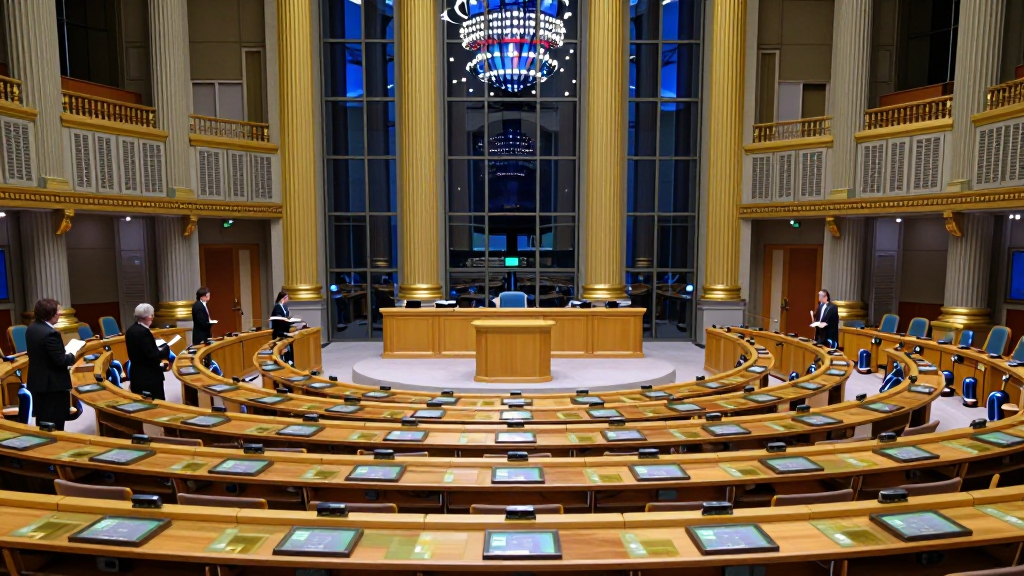
NEW YORK — The General Assembly of the United Nations convenes Wednesday to vote on whether the American embargo of Cuba should end, for the thirty-fourth consecutive year, an event organizers describe as running exactly on schedule.
The tradition dates to 1992, when the assembly first raised the question, the United States and Israel first cast the two dissenting votes, and nobody anticipated the genre this would become. Last year the resolution passed by a margin you could describe as a landslide with two tenants objecting. This year, the 193 member states were invited back for the 34th edition of what one careful write-up called a non-binding diplomatic exercise, and the turnout, as always, is expected to be brisk.
The day has its choreography, unchanged across three decades of assembly presidents. By midmorning, the Cuban delegation arrives carrying a resolution nearly identical to last year’s resolution, which was nearly identical to the year before that. By afternoon, more than a hundred co-sponsors sign. Career diplomats who have attended more than twenty of these votes describe the debate as getting shorter while the speeches get longer, a trade-off they consider healthy.
“This is the institution at its most reliable,” said Jean-Marc Beaulieu, a Canadian delegate who missed only one embargo vote in nineteen years, and that one because of a flight out of Montreal. “The markets fluctuate. Treaties die in committees. But on this Wednesday in October, the world stands up and says the same thing, in the same room, in the same order. People call that redundancy. I call it ballast.”
The atmosphere this year carries a thin wire of novelty. Pressure from Washington on hemispheric neighbors has raised speculation that some Latin American and Caribbean delegations may shift their position — vote yes with less enthusiasm, perhaps, or abstain with real enthusiasm. The American delegation is expected to explain, at length and with charts, that an embargo is a form of encouragement. The Israeli delegation is expected to second the motion that the American charts are beautiful.
A junior protocol officer, who has now stamped the same agenda item for six years and spoke on condition of being allowed to keep his badge, said the office stopped printing contingency placards in 2004.
The results, when they arrive, will be tallied on the same green board that has rendered the same overwhelming pattern since before most of the gallery attendants were born: a forest of yes, two red no’s, a clearing of abstentions where the weather is being watched. The secretary-general will note the margin. Cuba will call it a verdict. The United States will call it a mistake by everyone else. The embargo will continue, unchanged — the same outcome the vote produced for the previous thirty-three editions, and one delegates, it must be said, keep voting for year after year with an attendance record most institutions would sell their endowments to match.
The assembly reconvenes next October. The resolution is already typed.