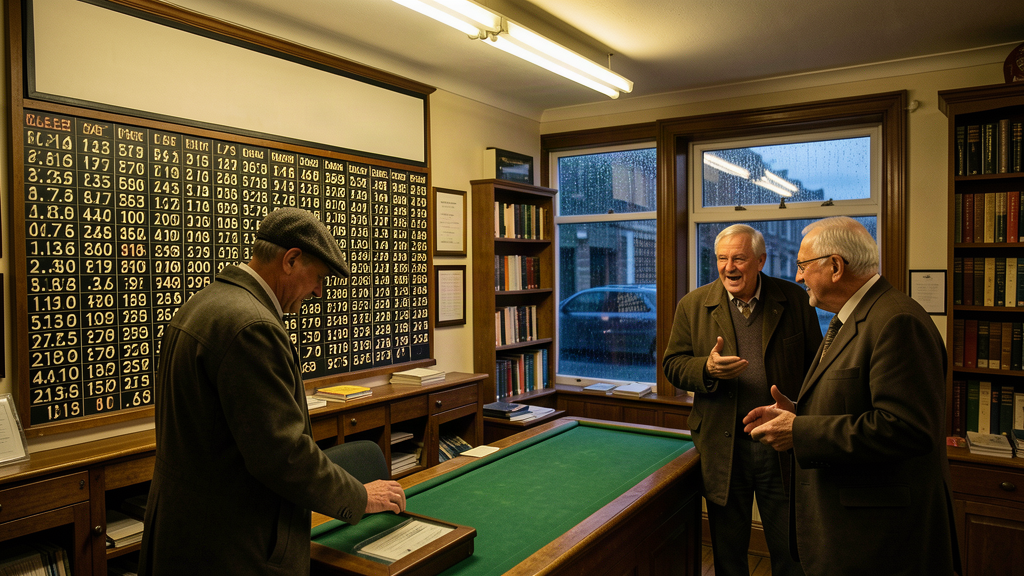
LONDON — Gerald Finch has managed the family bookmakers on Croydon’s High Street for twenty-two years, and he says the week Richard Madden’s name appeared in the 007 market was the most animated his shop has been since a wedding.
“Everyone in Croydon has an opinion, and I am contractually obligated to take all of them for two pounds,” Finch said, arranging form guides with the calm of a man who has seen nations panic over smaller things than a spy.
The thing under panic this month is the casting of the next James Bond, an event that arrives once in a generation and which Britain now conducts exactly the way it conducted the recent election of its most consequential fictional monarch: through betting. The bookmakers cut their odds on Madden this week after the 40-year-old Scottish actor, known to the realm as Robb Stark of Game of Thrones, went in days from a fringe rumor to what the trade calls a live position, the sort of move that makes a bookmaker’s clerks stop talking like clerks.
The official process, for the record, is more dignified than the shop floor and slightly less decisive. Casting began this spring under the direction of Denis Villeneuve, with Nina Gold running the searches and screen tests now under way across the country. The producer Amy Pascal said this month that an announcement before the end of 2026 is “a good bet,” her words, and that the team is being “really, really methodical.” The screenwriter Steven Knight has said the first draft of the script is finished, and that he knows which actor he is writing for, which is the most information the country has received since May and it arrived in the form of a riddle.
The listed contenders read like a census of every British television series the public has recently developed feelings about: Madden, Jack Lowden of Slow Horses, Callum Turner of Masters of the Air, Josh O’Connor of The Crown, and Regé-Jean Page, whose name has been in the market so long that bookmakers now accept bets on him with a small surcharge for exhaustion.
What interests Finch is the mood, not the number. Britain, he observes, is a country that no longer agrees on much of anything it can hold, and has therefore outsourced its argument about identity to the one institution it still trusts to keep receipts. The betting slip has become the national ballot on the question of who the country would like to be at 6 feet, in a dinner jacket, licensed.
“It’s not gambling here, it’s participation,” Finch said, taking a two-pound stake on Madden from a retired bus driver who declined to be quoted but wished the nation luck. “Everyone gets to be right, or nearly, and the shop absorbs the rest.”
By closing time the board had moved again. The retired bus driver came back in from the rain to see if he had been right, found he had, and spent his winnings — nine pounds — on a pint for the man he had argued with that morning, who had been wrong, at length, in public.