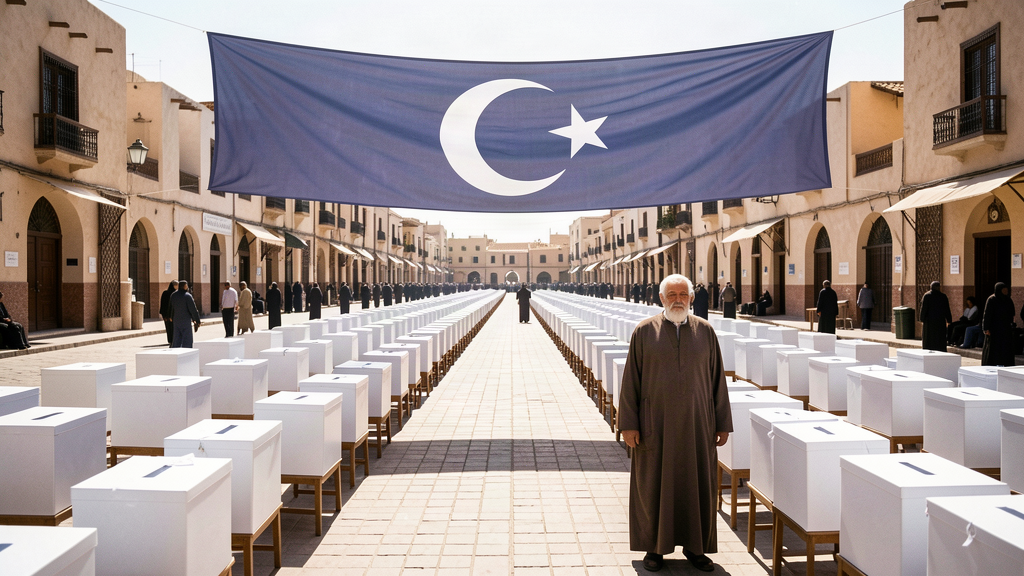
RABAT, Morocco — In what election officials are calling “the most decisive expression of public trust in the democratic process in the modern era,” Morocco’s legislative vote produced the lowest turnout in nearly two decades, with roughly 38 percent of registered voters casting a ballot, a result that was met with widespread congratulation from government insiders.
“The people have spoken,” said a senior election official, pausing for effect. “And what they are saying is very little. That is the most honest thing the public has ever done.”
The center-right Authenticity and Modernity Party, which is closely allied with the monarchy, won roughly 95 of 395 seats — a margin of victory that, as one political analyst observed, “is the largest victory a party has ever won over people who simply did not show up.”
MOROCCHIANS BY THE NUMBERS (ELECTION DAY)
- 16 million registered voters
- ~38% showed up — the lowest in nearly 20 years
- ~62% opted out, which officials called "a very clear signal"
- 1 elderly voter, photographed at the front of an otherwise empty line
The timing of the result has drawn particular attention, because it landed in the same year that Morocco is preparing to co-host the 2030 World Cup, a roughly $20 billion infrastructure push that analysts say will require a great many roads, stadiums, and hotels. “The public is saving its energy,” one strategist explained. “You can’t vote and also build a World Cup. The people are smart. They are prioritizing.”
Young voters, in particular, were noted to be conspicuously absent, a trend that one youth-advocacy group described, in a statement that was itself widely shared, as “not an absence but a presence of a different kind.”
Observers noted that the turnout figure, while the lowest in two decades, was actually the second-lowest in three — a nuance that one careful reporter spent an entire broadcast explaining to an audience of approximately four people.
At press time, the government was reported to be drafting a commemorative stamp to honor what one official called “the great civic act of showing up less,” which would be released in time for the World Cup draw.