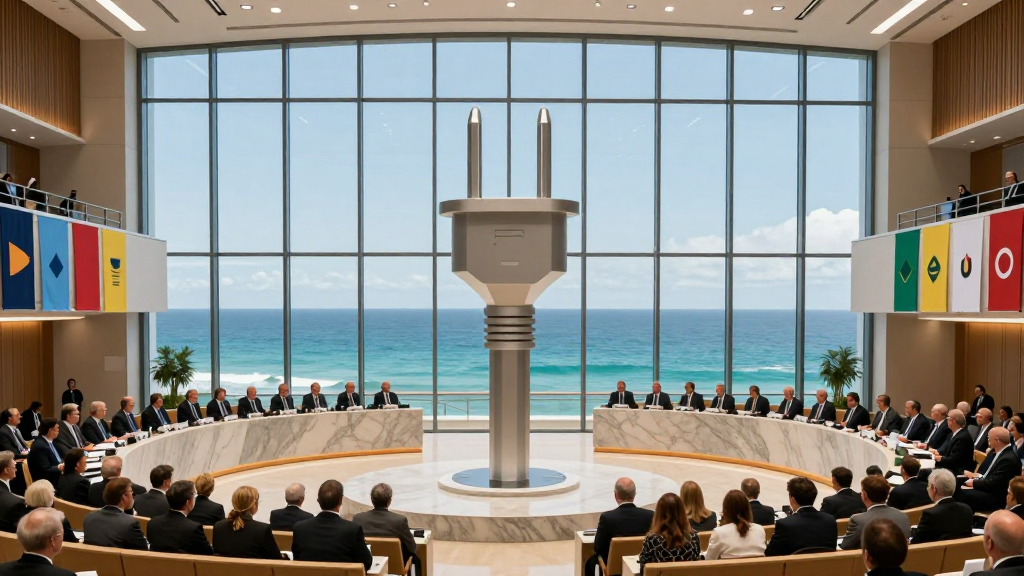
The world’s climate conference opened its leaders’ week in Antalya with a plan so direct that delegates spent three days attaching footnotes to it: more electricity, everywhere, plugged in by 2035. Over one hundred heads of state gathered on the Turkish Riviera to endorse the “35-by-35” electrification pledge, which proposes lifting electricity’s share of humanity’s final energy use from 21 percent to 35 percent in under a decade, sourced, the text says with optimism doing heavy lifting, “preferably” from wind and sun.
1. The host: two countries, one gavel
The first innovation of COP31 was the summit’s own address. Turkey hosts and chairs; Australia, having originally volunteered to host, kept the other half of the deal and serves as president of the negotiations, steering the text from a beach nine time zones from the beach it is technically standing on. Diplomats call this a shared presidency. Everyone else calls it what it is: two nations split the hosting the way roommates split a lease, one for the venue, one for the disputes, both signing the same lease in the same ink. It worked flawlessly, which was the surprise everyone politely declined to mention.
2. The plan: more outlets, fewer fires
The science of the pledge is simple enough to tattoo on a kettle. Nearly everything that currently burns things — furnaces, kilns, engines, the entire concept of a stove — can instead be a wire. Electrify a third of energy use and the emissions fall even before anyone argues about where the electrons come from. Guterres, addressing the room, asked the assembled governments to stop announcing and start executing:
3. The fine print: somebody else’s mountain
By Thursday the arguments arrived on schedule. Electrification needs lithium, copper, cobalt — which means mines, which means the summit’s second document, the one on “mining safeguards,” which asks where the metals come from and whose river they belong to. Delegations from mining nations noted that solar panels do not photosynthesize themselves into existence. Delegations from mining communities noted that they had heard the solar portion warmly and the safeguards portion quietly. Both sides agreed the other side had a point, in principle, located in a country other than theirs.
At the closing plenary, the chair of one shared presidency thanked the other shared presidency, and the gavel traveled across the room like a passed dish, and the summit produced two documents, one pledge, and the precise, familiar number of concrete commitments: one per headline, each assigned to a year and a ministry. The delegates boarded the flights. The sea stayed turquoise. Somewhere in the grid plans sits a transformer that must be manufactured, shipped, and buried in a ditch by a contractor named in no document this summit produced, at work on no schedule anyone photographed.
21 percent today. 35 percent by 2035. The math needs the next three thousand three hundred days.
Reader Comments (7)
These comments were written by our staff. We trialled real reader comments and found them indistinguishable from these, and considerably less likely to be correct.
Posting is open to readers who finished the article. Nobody has ever qualified.
Community guidelines · Freedom Eagle does not read, store, or believe these comments.