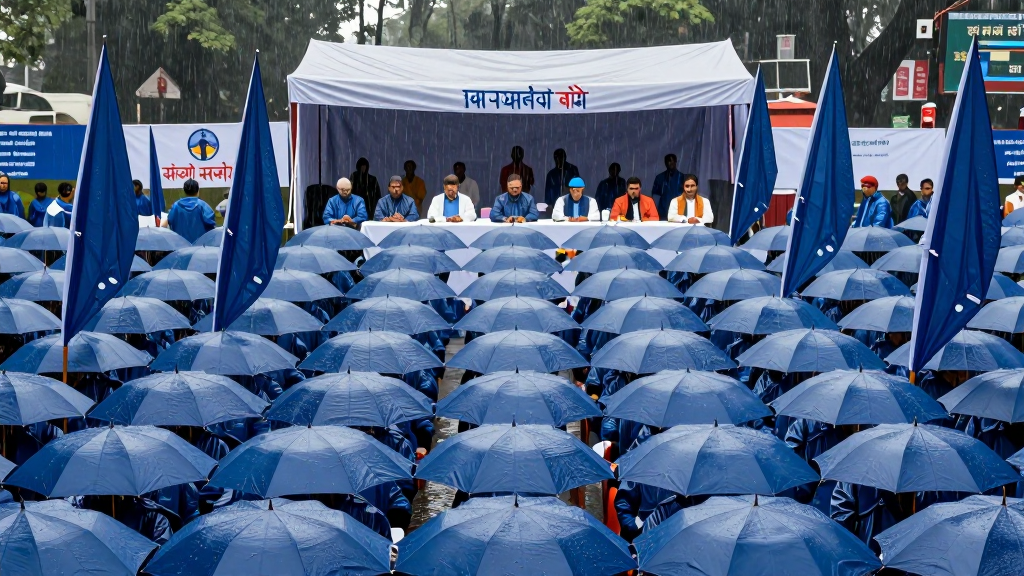
NEW DELHI — The constitutional proceeding was scheduled for noon. The rain had other intentions, and in a democracy, the rain has standing.
At 9:47 Friday morning, the INDIA bloc announced on schedule that at midday it would hold a public impeachment of Chief Election Commissioner Gyanesh Kumar, the culmination of a countdown the opposition had been broadcasting for days, complete with the vocabulary of removal and the machinery of a rally. By 11:20, the sky had gone the color of a school slate and begun to lean on the city.
At 1:05, Leader of the Opposition Rahul Gandhi announced a postponement to Saturday, same venue, same hour, and offered the reason with the directness the moment deserved.
The decision was received as statesmanship. No one impeaches in the rain; the paperwork waits for the sky. Constitutional law has three traditional branches, but as of Friday afternoon, Indians broadly agree there is a fourth, and it is the India Meteorological Department, which did not arrest anyone and did not pardon anyone and simply, for now, declined to permit.
By Saturday morning, the forecast had improved marginally and the ceremony had slipped to the afternoon, still on account of weather, a second adjournment that legal observers described with total seriousness as procedural.
“What strikes me is the discipline,” said Professor Ananya Das-Gupta, who holds a chair in comparative procedural law at a new institute that received its charter this spring and already considers the week a landmark. “Every democracy must finally decide who gets to say when it is time to work. India spent the weekend discovering the answer is the forecast.”
The opposition’s grievance against Mr. Kumar — which concerns the integrity of the voter rolls, a matter of thousands of pages and several court filings — was described Friday by organizers as undiminished by meteorology. The government’s defense of Mr. Kumar — that the election commission is independent and the opposition is sore — was described as undiminished as well. The rain, for its part, made no findings.
Delhi’s roads flooded, its goats relocated, its tea prices held. Umbrellas, deployed in the thousands, were government-issue blue, and photographs of the rally ground from above showed a grid so orderly that a civic-affairs columnist called it the best-run Indian gathering of the month.
On Saturday evening the clouds drew back and broke for the weekend, leaving the capital damp and its constitution intact, disputed and dry. The impeachment continues to search, with the patience of a very large party, for a cloudless day.