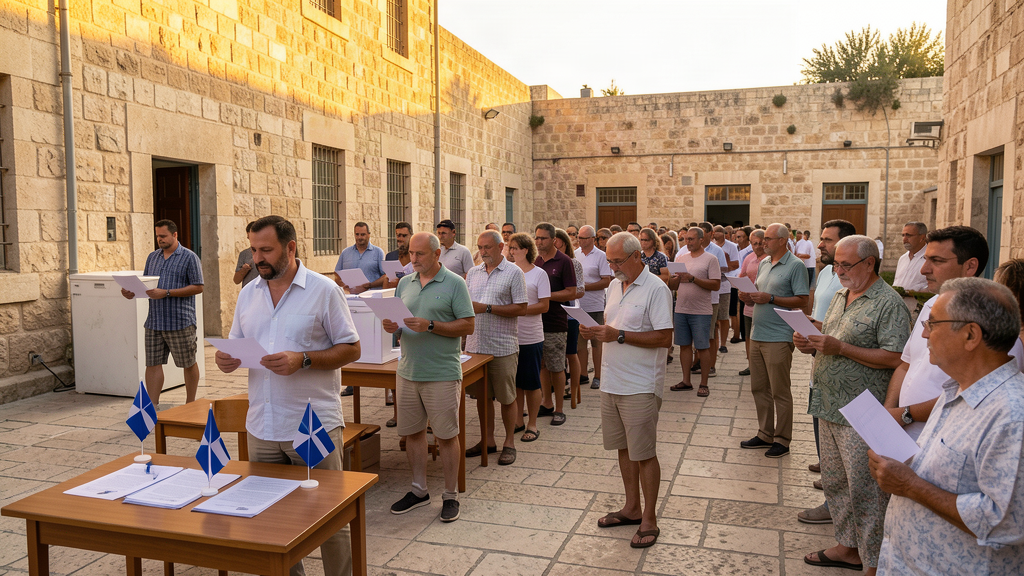
JERUSALEM — The queues began at 6:40 a.m., a full twenty minutes before the law required them, because Israelis have been voting in this country’s sixth national election since 2019 and have learned that the first thing to open is the line.
By 7 a.m., polling places in Jerusalem, Tel Aviv and Haifa were doing what they do: schoolyards, ballot boxes, folding tables, and citizens emerging one by one with their pink and blue envelopes folded exactly as directed, which is a small national talent. Turnout was strong by mid-morning, as it is every time, which is the part outsiders always find strange — the turnout, not the repetition. The country has stopped calling it an event.
The race, briefly: Benjamin Netanyahu and his coalition face a bloc anchored by Yashar, the party of Gadi Eisenkot, a former chief of the general staff whose principal campaign attribute, voters note, is having been a general and having not been Netanyahu. Most polling before Tuesday showed the coalition losing its majority, which in Israel is not an ending. It is the beginning of the arithmetic.
Because the Knesset has 120 seats, and the entry threshold is 3.25%, Israeli elections produce parliaments the way a roulette wheel produces numbers: reliably, and in more varieties than anyone can keep track of by morning.
“The opposition agrees on three things,” said Amnon Biton, who has run a campaign bus for four of the last six elections and paints the license plates himself between votes. “Not the current government. Not each other’s finance ministers. And that the third thing is not a thing.”
Voters themselves mostly described the day with affection bordering on routine. A woman in the queue outside a school in Arnona said her daughter was being born the way this country votes: scheduled twice, then early. A man showing reporters his thumb said ink was the one part of elections Israelis trust, because it is the only part that tries to stay.
At 10 p.m. the polls close, and the countdown studios begin, with their tall boards and their color-coded seats, and every seat assigned to a party that has not yet met the other parties it will enter a government with. Final results are expected in the days after, because Israeli counting has the pacing of a wedding: the family is already arguing before the cake is cut.
Past midnight in the countdown hall, a volunteer was taping a small blue seat onto the board for a party that had cleared the threshold by four hundred votes. The volunteer had taped seats in six elections. Asked what tonight meant, she said the meaning comes later, from men in suits describing what the numbers now require. Then she taped on another seat, and the board filled, as it always does, one square at a time, long after the last vote.