STOCKHOLM — The Riksdag has 349 seats. Four parties currently hold 176 of them, which is one more than a majority requires. The four parties agree on the majority. They agree on the date of the next vote, which is Thursday. They even, by most accounts, agree on who won the September 13 election. What they have not yet produced, after two formal attempts and a month of consultations, is a government.
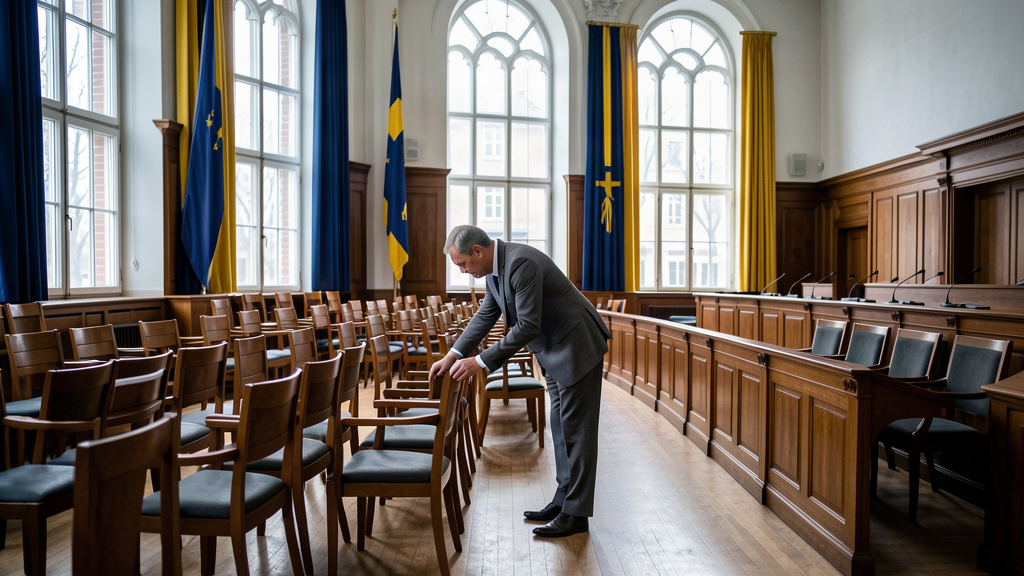
The man whose office keeps the calendar is, in a real sense, the most employed person in Swedish politics right now. Anders Hallengren, a deputy marshal’s secretary who has spent his career scheduling votes and who has now, at 58, become something of a national figure, oversees the logistics of a country that cannot stop voting. His staff has printed the ballot instructions for Thursday’s attempt in three fonts, because the parties could not agree on which translation of the procedural rules to cite.
Under the Swedish system, a prime minister need not win a positive vote — only avoid a majority voting against. It is the most forgiving path to power in Europe. Magdalena Andersson’s bloc won 176 seats against outgoing premier Ulf Kristersson’s 173, and yet the Social Democrats, the Left Party, the Centre Party, and the Greens remain unable to settle which of them may enter the room where the governing happens.
Hallengren’s advice to the press has been restrained. “Thursday is real,” he said, standing beside a stack of unused name placards tall enough to be a small piece of furniture. “We have printed for Thursday every Thursday for a month. The paper is good paper.”
He was asked whether Sweden was in a crisis. He said the word crisis belonged to countries that could not agree on anything. Sweden had agreed on everything except the one thing. He said this without irony, and then went back to straightening chairs.
The fourth attempt begins Thursday at 2 p.m. The name placards are already printed.