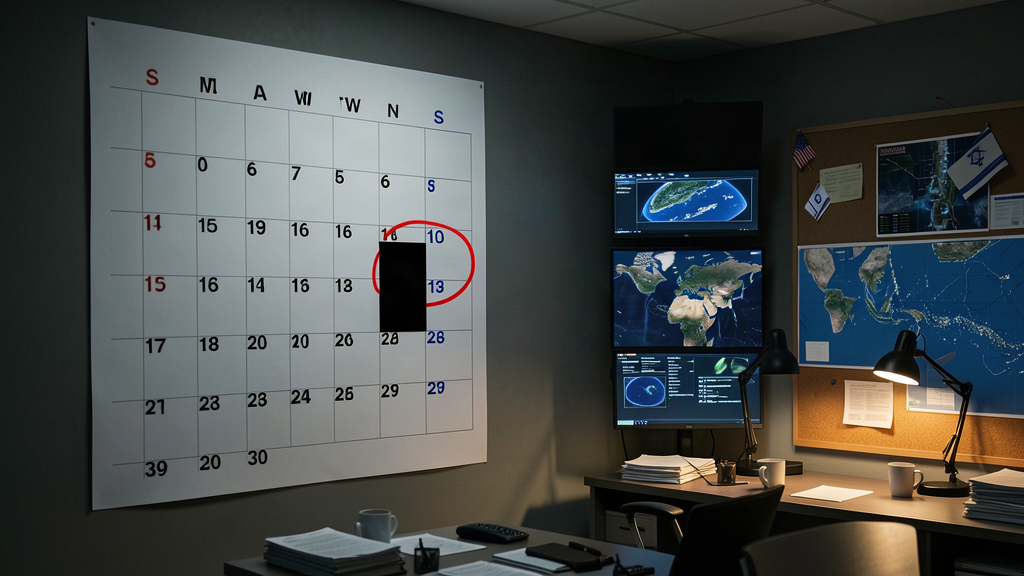
The most important diplomatic document of the fall is not a treaty. It is a wall calendar, and according to people briefed on the planning, it has been beautifully kept.
THE CALENDAR
The United States and Israel have, as reported this week, drawn up specific plans for renewed strikes on Iran — plans that begin, with remarkable courtesy, after the American midterm elections on Nov. 3.
Officials describe the operation as short and intensive: roughly three days of strikes, with nuclear facilities among the targets. Three days is an ideal election-year number. It starts after the polls close on a Tuesday, ends before most families have finished arguing about the Senate, and leaves the entire Thanksgiving travel season clear.
THE WINDOW
The scheduling instinct is not one-sided. Israel had initially planned a strike in mid-October, about two weeks before its own elections, and then, like any responsible office, it moved the meeting. What emerged is a shared window: a post-election, pre-Thanksgiving corridor in which the democracies of the free world can do very serious things while the voters are, correctly, busy with their receipts.
The genius of the window is that it flatters everybody. The American voter has been informed that nothing of global consequence will happen before he or she has had a say. That is a compliment. And then, having received the compliment, the same voter gets to watch it happen anyway, which is the reward for voting.
THE BOOKING WINDOW, AT A GLANCE
- Tuesday, Nov. 3: Midterms. All hands on deck for counting.
- Wednesday, Nov. 4: The window opens. Staffing returns to normal.
- Duration: Approximately three days, described by planners as "intensive."
- Buffer: One full week before Black Friday, per holiday logistics.
Iran, for its part, has said it is prepared, which is what every party says about a calendar it did not write. In Tehran the operation is understood to have an entirely different name, and in Washington it has a number, a start date, and a small note in the margin reading “after the races.” Nobody involved described the plan as cynical. The word used most often, by people with access to the room, was “tidy.”
The midterms are Tuesday. The window opens Wednesday.