NANTERRE, FRANCE — The heist took ninety seconds and failed in the last ten.
At the Renoir Museum in Cagnes-sur-Mer on the Riviera, on the night of September 8, thieves used an electric saw on the fence, entered through the ground floor, and cut the clips holding four paintings. The alarm sounded. Police arrived in four minutes. The men ran and took only two paintings, abandoning the other two in a protective sleeve, where they left behind the single most important object in the case: their own DNA, on the sleeve.
By Monday, a French prosecutor had charged four men, recovered both paintings — “Portrait of Madame Colonna Romano,” torn, and “Young Woman at the Well,” with damage to its frame, worth about $4.7 million together — and revealed that the recovery happened almost by accident, because one of the thieves was already being watched.
The DNA matched a 29-year-old already under investigation in a drug case, which meant police were already tracking his vehicle. The vehicle data put him at another man’s house minutes after the museum. On October 3, the same man visited the Maeght Foundation, a major modern-art collection up the coast, and met a fourth man whose name appears in art-theft and forgery files from 2001 and 2003. The paintings were found behind a wall. The arrests came, Bessone said, from the “very strong suspicion that another heist was imminent.”
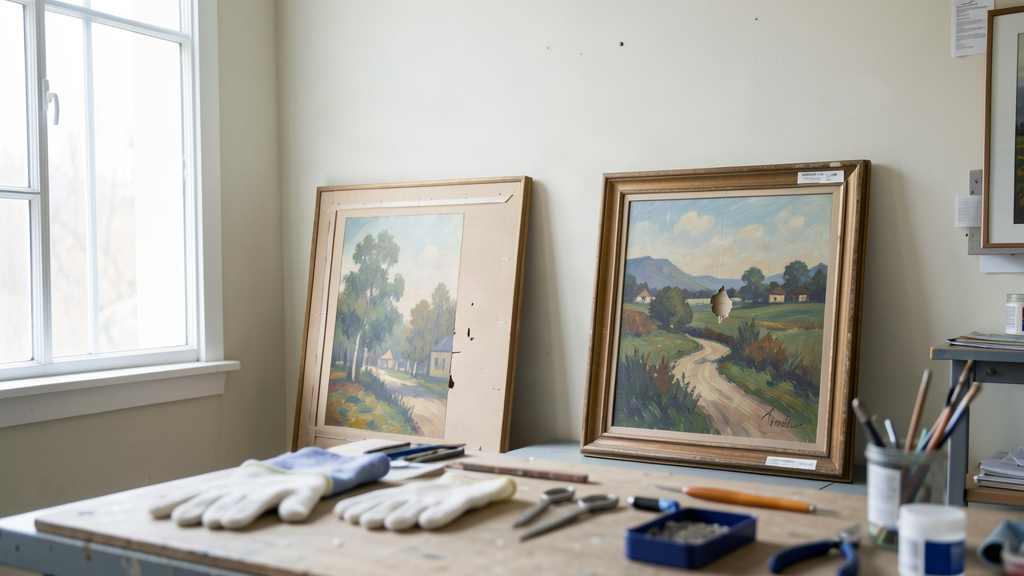
The second heist never happened, which is the part of this story the French tell with the flat pride of people describing plumbing. A museum was robbed. A sleeve was left. A car was followed. A wall was opened. Four men are in custody and deny wrongdoing, and the Renoirs — both of them, including the torn one — are in a conservation studio in Marseille, being un-cracked by people with cotton gloves.
The town of Cagnes-sur-Mer, population roughly 50,000, has one Renoir museum and, as of this week, two recovered Renoirs, a torn canvas, an intact canvas, and a protective sleeve that has now been entered into evidence twice: once as trash, once as the best witness France has produced all year.