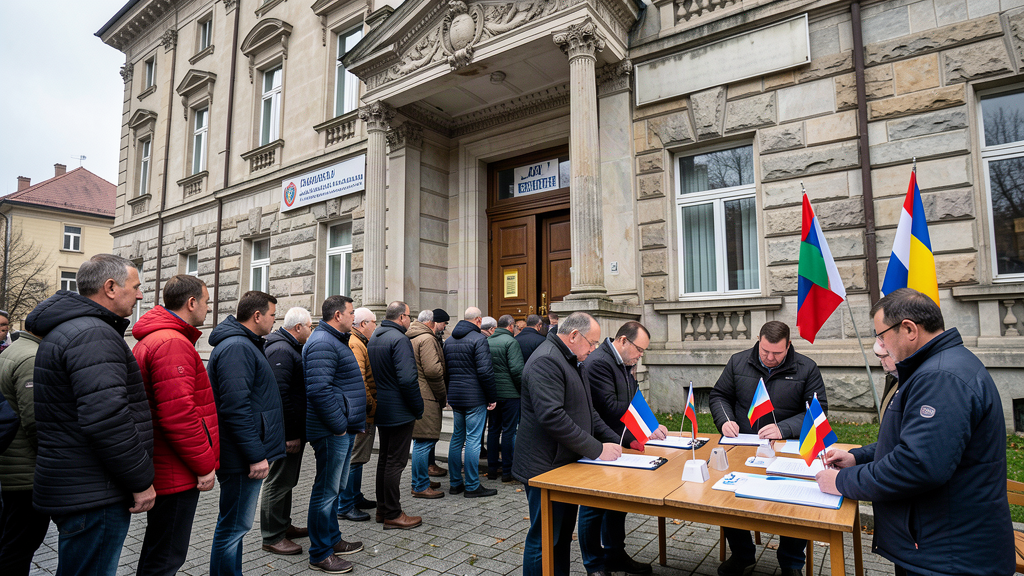
SARAJEVO, Bosnia-Herzegovina — Bosnia held a general election Sunday under a constitution so committed to balance that the country does not have one president but three, representing its three main peoples at once, and voters, after long deliberation, responded by electing a fourth position: a mood.
Preliminary results reported by the Guardian showed Željka Cvijanović of the Alliance of Independent Social Democrats leading for one of the three seats on the country’s rotating presidency, with more than 55 percent of the vote in her race. Her party’s leader, Milorad Dodik, declared victory for his side from Banja Luka, where supporters celebrated a sweep of the Serb-led entity.
Turnout, per the Central Election Commission, was about 42 percent. That number deserves respect. In a country where every ballot technically elects a share of a presidency, a 42 percent turnout means nearly half the country looked at a system designed so no one could dominate and concluded that, even with a share, they’d rather not.
The system works like this: voters choose among Bosniak, Croat, and Serb members of a three-person presidency, which rotates the chairmanship every eight months. Eight months is less time than it takes to redecorate an Oval Office. Bosnian presidents have governed in the time it takes most governments to schedule a summit, and the country has survived, which is the achievement.
The Al Jazeera read of the vote emphasized economic pressure and the prospect of European Union membership. Both are real. But the deeper story is procedural. Bosnia has proven that a nation can hold free elections at a speed no other country can match — every eight months, somewhere, someone is technically in charge — and still remain completely undecided about what that means.
BOSNIA'S PRESIDENCY: A FEATURE LIST
- Three presidents, one per constituent people, so no single voter has to compromise with anyone.
- Rotating chairmanship every eight months, ensuring fresh leadership before any leader becomes familiar.
- Two entities, one federation, one district, a map that requires a legend and rewards patience.
- 42% turnout, which in a three-way system means the country achieved a quorum of opinions on all three seats at once.
The European Union called the vote a step forward. The step is real. Bosnia has now voted with the same three-part harmony it has maintained since 1995, and the union’s patience, like the rotation itself, is scheduled to continue.
At press time, election officials confirmed that the new presidency would be sworn in, photographed together, and then, per the constitution, begin counting the days until one of them gets to be in charge for eight months.