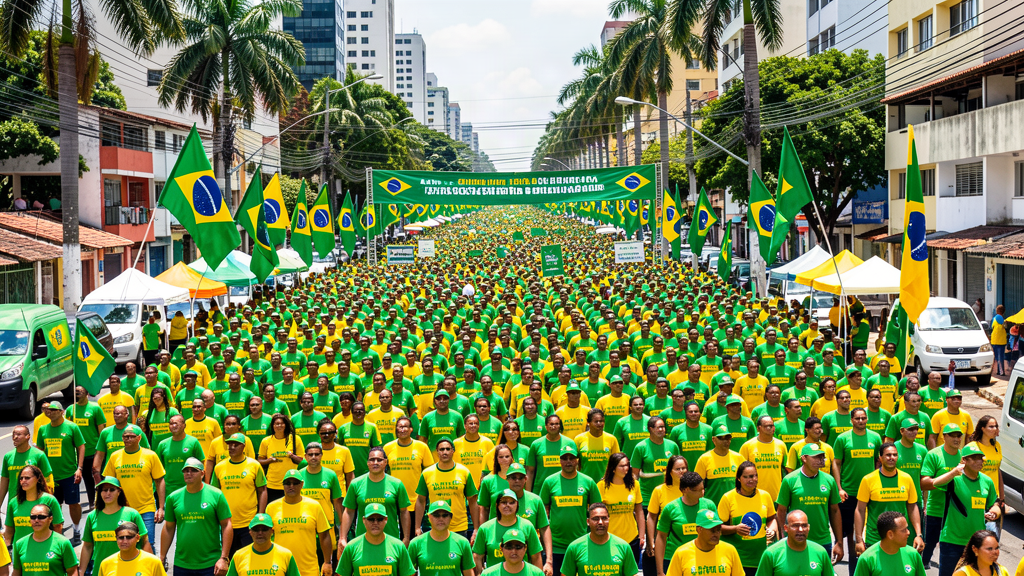
BRASÍLIA — Brazil goes to the polls today in what analysts are calling the most family-oriented election in the history of the Western Hemisphere, with an 80-year-old incumbent seeking a fourth term and a senator running to avenge his father, who is currently in prison and cannot run himself.
To be clear, neither candidate is running for his own job. President Luiz Inácio Lula da Silva, 80, is running for the job he already has, which he has held four times, while Senator Flávio Bolsonaro is running for the job his father lost, which his father is no longer legally permitted to hold. Voters appear to find this acceptable. Final polls had the two nearly tied, 46 percent to 45, which in any country is a photo finish, and in Brazil is a photo finish between two dynasties.
Lula closed his campaign Saturday with a march through São Paulo that his campaign called a record crowd. At 80, he is the oldest person to hold the presidency of Brazil, a country that has had a great many presidents and has clearly decided the answer to that is more of the same one.
The Bolsonaro campaign runs on a simpler and, frankly, more relatable premise: the candidate’s father was wronged, and the son intends to settle the score. Jair Bolsonaro, the former president, was convicted by the country’s supreme court, barred from the ballot, and is serving time in prison, from which he endorsed his eldest son with the confidence of a man filing a claim through his insurance adjuster. Flávio Bolsonaro has accepted the endorsement and, by all accounts, the assignment.
THE BRAZILIAN BALLOT AT A GLANCE
- Lula, 80: seeking a fourth term. First held office in 2003, before most of today's voters were legal adults.
- Flávio Bolsonaro, 44: running for the presidency his father was convicted of trying to keep.
- Jair Bolsonaro: in prison, polling from inside it, the first incarcerated campaign manager in South American history.
- Runoff: if neither tops 50 percent today — and neither is expected to — the two meet again October 26, giving every voter a second chance to make the same choice.
Some say the election is a referendum on democracy. Others say it is a referendum on the economy. The truth, as always, lies somewhere in a third position I just invented: it is a referendum on whether a country should let one family settle a grudge at the national level, and the Brazilians, to their credit, are answering that question the way all mature democracies do — by showing up in enormous numbers and splitting almost exactly down the middle.
At press time, polling stations had just opened, and the Bolsonaro campaign announced that his father would be watching the results from prison with the rest of the family, having secured a better seat near the television.