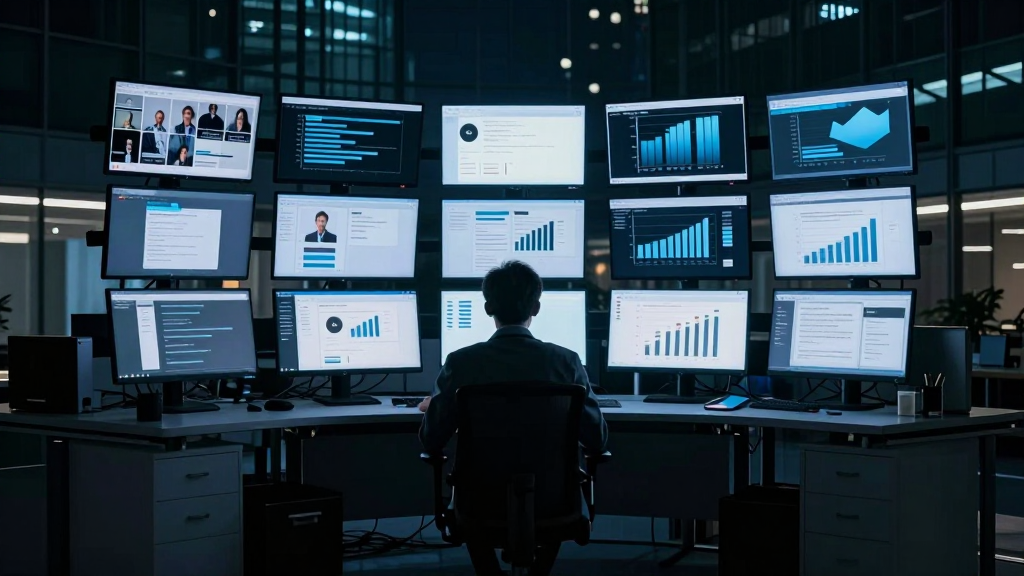
On the ninth floor of a glass tower in Gurugram, the man who runs the India’s largest democracy’s favorite export — elections — sat with his back to a wall of glowing monitors and explained why the American midterms were, frankly, an easy account.
He declines to give his name, the name of his firm, or the names of the twelve countries where his firm has already worked, which he regards not as secrecy but as inventory. What he will discuss is process. Anonymous social media accounts, shadow-posted video, comment sections that arrive pre-populated, diaspora pages that go warm on cue — the package, sold flat-rate, with rush pricing near Election Day. His industry’s résumé runs from Kenya to Suriname to South America, and this fall it added the United States, where the New York Times found shadow accounts boosting one Michigan candidate in the weeks before she lost her primary.
“American elections are easy,” he said, and you can hear why. “Everywhere else, you must find the voters. In America, the voters find each other and do half the work. We simply increase the volume in rooms that are already built. The rooms are enormous. They are called everything from Facebook to a church parking lot.”
His trade has a low opinion of American security rules, mostly because it finds them polite. Meta’s policies disallow buying, selling, or exchanging accounts, and political advertisers in many countries are supposed to verify who they are and say who paid. To the Gurugram trade, these requirements read as a form to fill out, and forms are a solved problem. A New Delhi-based consultant, who speaks openly because his competitors already know what he does, put the business case simply: results delivered in a complicated democracy as large as India will attract foreign campaigns too. He is, by now, proven.
What the Americans find disorienting is the direction of trade. For two centuries the United States exported political advice — consultants, observers, software, the whole vocabulary of the campaign trail — to every corner of the globe. This cycle, the advice came back, and the balance sheet looks healthy. A service Americans provide to the world at premium rates — running elections with foreign participation — is now being provided to Americans by foreigners at competitive rates, and the quality is comparable. Free trade, in the end, arrived in the one market nobody defended.
The consultant says his U.S. desk is booked through the general election in 2028 and that requests come from both parties’ campaigns, super committees, and “several businesses that pretend to be movements.” He is not, he stresses, a hacker or a spy. He is a marketer in a jurisdiction with favorable staffing and no patience for paperwork, and the customer is always the candidate who feels behind.
“The Americans ask, who did this to us,” he said, in the tone of a man who has answered the question in fourteen countries. “In every country, the answer is the same. Nobody did this to you. You were already doing it. We were hired to speed up what your own side was doing slowly, badly, and without a budget. This is not interference. This is logistics.”
He has already scheduled November 2028 meetings in Washington, he said, because the American market rewards vendors who arrive early.