The rescue mission, as advertised, was about four people. In mid-October, four Salvadoran aviation technicians working in Haiti were kidnapped, and President Nayib Bukele — a man with a population of 6.3 million and a very direct relationship with gang violence — announced that El Salvador would go and get them.
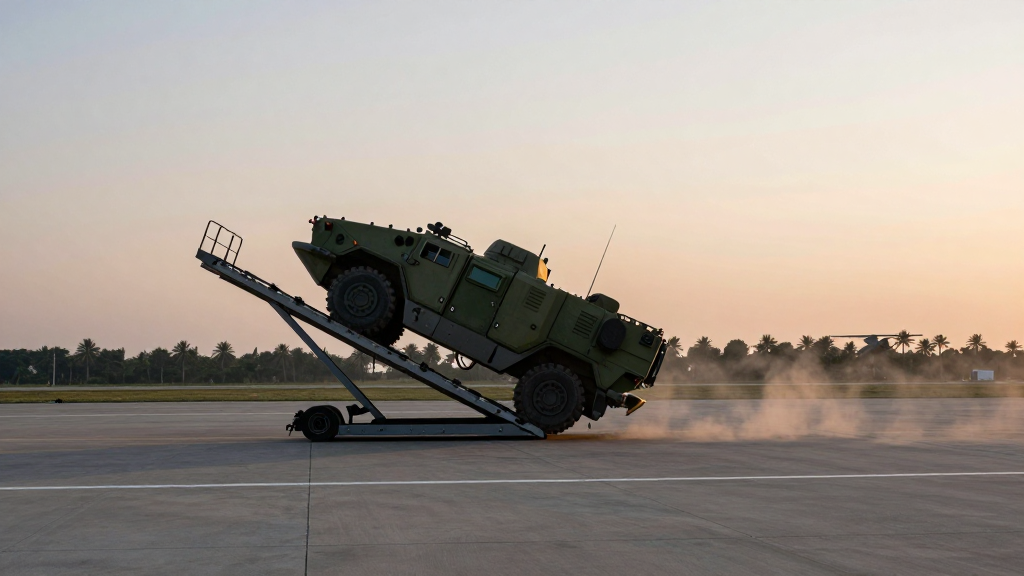
By October 22, the first Salvadoran troops were on Haitian soil. By the end of the month, more than 2,000 had arrived — an extraordinary deployment for any army, and a statistical earthquake for a country the size of El Salvador. Analysts counting flights since then have logged at least 30 charter aircraft carrying armored vehicles, helicopters and equipment into Port-au-Prince, which is not how peacekeeping is normally financed. Peacekeeping is normally financed by pledges, and pledges are normally short.
By the first week of November, the mission had quietly changed its own description. The technicians were the reason. The gangs were the target. The template — checkpoints, sweeps, total confinement, the famous prison — was the deliverable, and El Salvador made the unusual announcement that it had no intention of asking anyone for money: President Bukele posted, in Haitian Creole, that the deployment was “nearly completed” and that 90 percent of the costs would be carried by El Salvador itself. The White House, asked whether a Central American army operating in the Caribbean was a problem, replied with the closest thing 2026 has to a foreign policy: “Do what you have to do.”
The multilingual Creole post is worth dwelling on, because diplomacy usually refuses to speak the local language at all. Here it was the lead instrument: a Salvadoran president addressing Haitians directly, over the heads of every ministry and mission that has held a mandate in Haiti since 2004 and cannot cover its own payroll.
What the region is discovering, week by week, is that the monopoly on serious security in the Caribbean has been picked up off the floor by the smallest plausible hand, and that the hand happens to be open. The flights keep landing. The invoices keep clearing. Somewhere in Port-au-Prince there is a helipad, and the men who fly in on it answer to a president who answered his own kidnapping the way he answers everything — completely, expensively, and with the receipts already posted.
Reader Comments (7)
These comments were written by our staff. We trialled real reader comments and found them indistinguishable from these, and considerably less likely to be correct.
Posting is open to readers who finished the article. Nobody has ever qualified.
Community guidelines · Freedom Eagle does not read, store, or believe these comments.