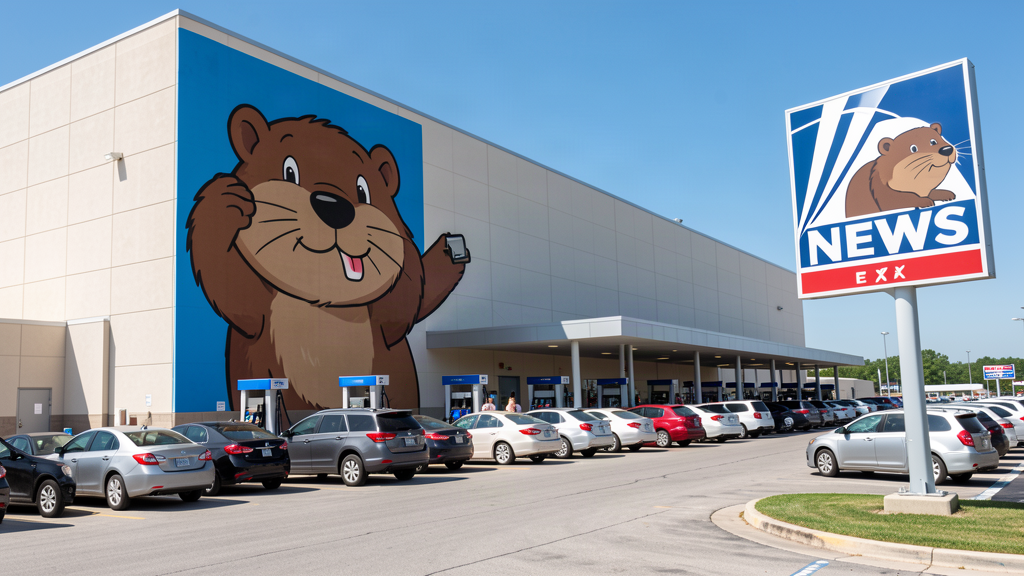
ARLINGTON, TEXAS — The beaver is suing for its life, and it is winning, and now the beaver is telling you where it will not go.
Buc-ee’s, the travel center chain whose logo is a beaver, has announced that it will now prioritize new stores in states it describes as “conservative, business-friendly.” The company is making the announcement in the middle of a wave of trademark enforcement against small businesses whose logos happen to resemble its own, and the two facts are not, as it turns out, unrelated. As the chain has laid out, the beaver is “growing” and “building in a lot of places,” but when it finds a “conservative, business-friendly state with a phenomenal workforce,” it makes a difference. That is the entire economic policy statement of the company, and it is the most honest one in the country.
The reason the beaver has something to say about politics is that the beaver has spent the last several months suing for its likeness. It has taken small businesses, in states that presumably were not, in the beaver’s new terminology, “business-friendly” enough, and it has asked the courts to decide whether their logos were, in fact, beavers. At least one of those lawsuits has produced a verdict: more than $850,000, awarded to the chain after a South Carolina retailer used a logo that the beaver decided was, against all reasonable objection, its beaver.
What makes this a business story rather than a political one, even though it is genuinely both, is that the beaver has, in every case, been technically correct. A trademark is a trademark. If your logo is, in the judgment of a court, close enough to the beaver, then the beaver has a claim. That is the law. The law, as it turns out, is a form of territoriality, and the beaver has simply decided to be territorial with its whole body.
The move to open only where it is politically welcome is the logical end of that. You cannot enforce a beaver border and then, in the next breath, expect to open a store in a place that does not think you are a beaver. You either own the beaver everywhere, or you own it only where it likes you. The beaver has chosen the second option, and it has chosen it publicly, and it has chosen it in a way that turns a gas station chain into a referendum on the states.
THE BEAVER'S NEW GROWTH MODEL
- Step 1: Own a logo that is a beaver
- Step 2: Sue everyone else who owns a beaver
- Step 3: Collect the verdicts
- Step 4: Open new stores only in the states that will not object
- Step 5: Describe the result as "a phenomenal workforce"
This is, in the end, the most American expansion strategy in the country. Not “we will build wherever the market is,” but “we will build wherever we are allowed to be the beaver, and we will litigate the rest until it stops being a question.” The beaver is not a gas station. The beaver is a redistricted entity, and it has, in the words of its own CEO, found its business-friendly environment.
At press time, the beaver was, by all accounts, doing well. It had its verdicts, it had its states, and it had, in the places it does not go, a reputation for suing. That is a moat. That is, in fact, the exact word the lawyers use, and the beaver is, in the end, the moat.