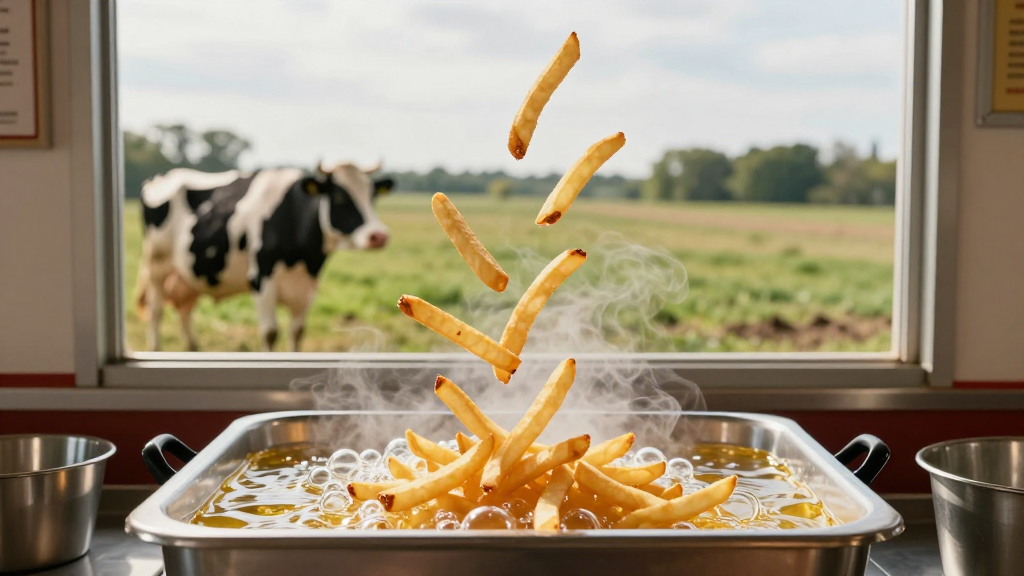
LINCOLN, Neb. — The vat at the county fair was already bubbling at 7 a.m., and by noon the vendor behind it — third generation, suspenders optional — had begun selling deep-fried butter: a stick of butter, breaded, dropped into a fryer full of rendered butter — a nesting-doll configuration, in his word, matryoshka, one that the state fair rules neither permit nor forbid.
“It’s matryoshka,” he said, not looking up. “The Russians know about layers. We know about beef.”
America is mid-swing back to the fryer of its childhood. Sales of products made with beef tallow crossed $1.1 billion in the year ending this past March — up 275 percent in three years — and the trend forecasters listed tallow among the fastest-growing items on American menus this month, forty-one percent up and still climbing. Steak n Shake fries in 100 percent beef tallow; Buffalo Wild Wings fries in beef shortening; a growing line of burger joints and chicken shops now advertise their cooking fat the way restaurants used to advertise their potatoes.
The Tallow Stack: A Beginner's Grid
- The fryer: rendered beef fat, smoke point high, memory longer. The original McDonald's fryer ran on it until 1990.
- The buyer: 52 percent of adults 18 to 34 say a restaurant's cooking fat changes where they eat. Half of America under 34 is now choosing restaurants by fat like it's a streaming service.
- The supplier: one wholesale restaurant-supply catalog reported 50 percent growth in tallow sales dollars this year, "paired with volume," as accountants say when they mean everybody.
- The cow: unaware of all of the above, per every farmer interviewed for this story, unanimously.
At a diner on O Street, line cook Devon Whitmore, 22, stirred the basket with the expression of a man revising a worldview. “I thought the beef was supposed to be on the bun,” he said. “Management says the beef has always been in the fryer. I have been personally deceived my whole life.” The fries, he allowed, taste “angry, in a good way.”
The anger has a source. A generation of social media convinced the young that seed oils — the bottle oils, the sunflower and canola things — are the villain of the American diet, and rendered cow fat arrived as the redemption arc. Dale Ubben, a dairy farmer outside Ulysses, Kansas, put the economics plainly: “The fat used to be a rendering problem with a truck schedule. Now it’s a check with a name on it.”
Not everyone is kneeling. A physician at a county hospital, reached between clinic and parking lot, said only that he keeps his coat on and “tries to stay optimistic about nostalgia,” before noting, with respect, that his grandfather never lived to see the fryers come back and also never had a treadmill. A vegetarian of thirty years, reached at the same diner, said he has now been betrayed by french fries twice, “and there is no safe fry. There is only the fry you haven’t dated yet.”
The last word belongs to Ruthie Macek, 88, who ordered the tallow fries, ate the basket in four unhurried moves, and delivered the verdict the entire industry has spent $1.1 billion to hear.
“They taste like 1989,” she said. “I can’t prove that they do. But they do.”
Reader Comments (7)
These comments were written by our staff. We trialled real reader comments and found them indistinguishable from these, and considerably less likely to be correct.
Posting is open to readers who finished the article. Nobody has ever qualified.
Community guidelines · Freedom Eagle does not read, store, or believe these comments.