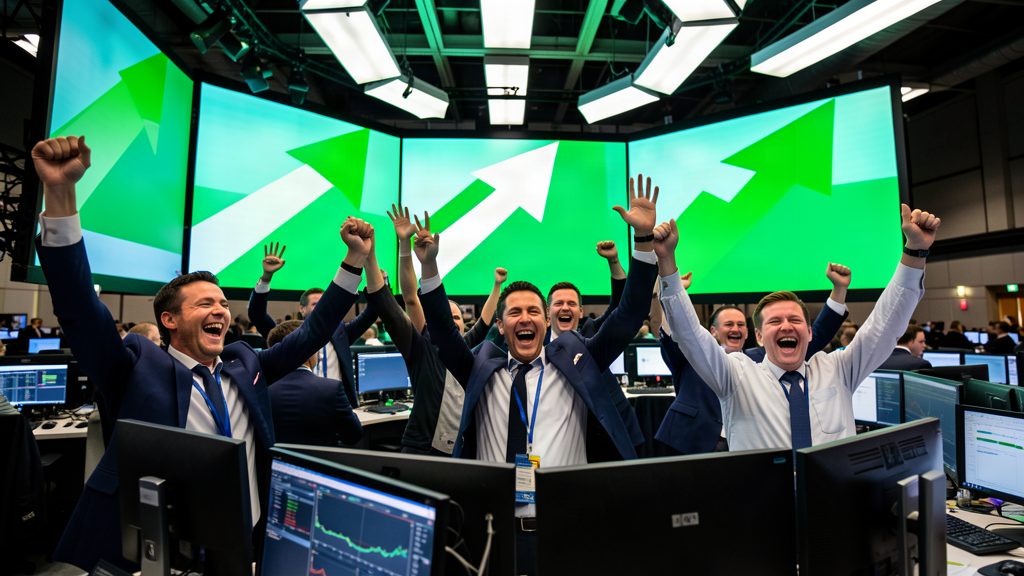
NEW YORK — The American economy added just 29,000 jobs in September, well below the 90,000 forecast, and Wall Street responded the way it always responds to news of Americans not being hired: with a party.
The Nasdaq hit a record high on the news that hiring had slowed sharply, because on Wall Street there is a concept called “bad news is good news,” which means that when the economy disappoints, investors celebrate, on the theory that a weak economy will stop the Federal Reserve from raising interest rates. The stock market, in other words, is now rooting against the American worker, and rooting for him to lose politely.
The unemployment rate rose to 4.2 percent. Traders interpreted this as a victory. CNBC reported that markets moved swiftly as investors concluded the soft numbers had “cemented the Federal Reserve staying put” at its October meeting, meaning the central bank would not raise rates, which Wall Street loves, even though the reason the Fed won’t raise rates is that 61,000 fewer people got jobs than anyone expected.
The phenomenon has a name on trading desks — the “Fed put” — which is the belief that any economic pain will eventually be relieved by the central bank cutting rates, and that therefore pain is, financially speaking, a good sign. It is the single most optimistic idea in modern finance: that when things get worse, someone will make them better, and you will be paid for the getting-worse.
THE JOBS REPORT, TRANSLATED FOR THE AMERICAN FAMILY
- 29,000 jobs added: the fewest in a year, against a forecast of 90,000.
- Unemployment 4.2%: up from 4.1%, meaning more Americans are looking for work and not finding it.
- Stock market reaction: up. The Nasdaq set a record.
- Fed rate decision: now expected to hold, because the economy is too weak to afford a hike.
- Net message to workers: your bad month is your good month, because it keeps the Fed calm.
Some say the market is rational, pricing in lower rates that will help everyone. Others say the market has lost its mind. The truth, as always, lies somewhere in a third position I just invented: the market is a machine that has learned to be happy about the wrong things, and it is very, very good at being happy.
At press time, the Bureau of Labor Statistics announced it would release next month’s jobs report early, so that Wall Street could celebrate again before the weekend.