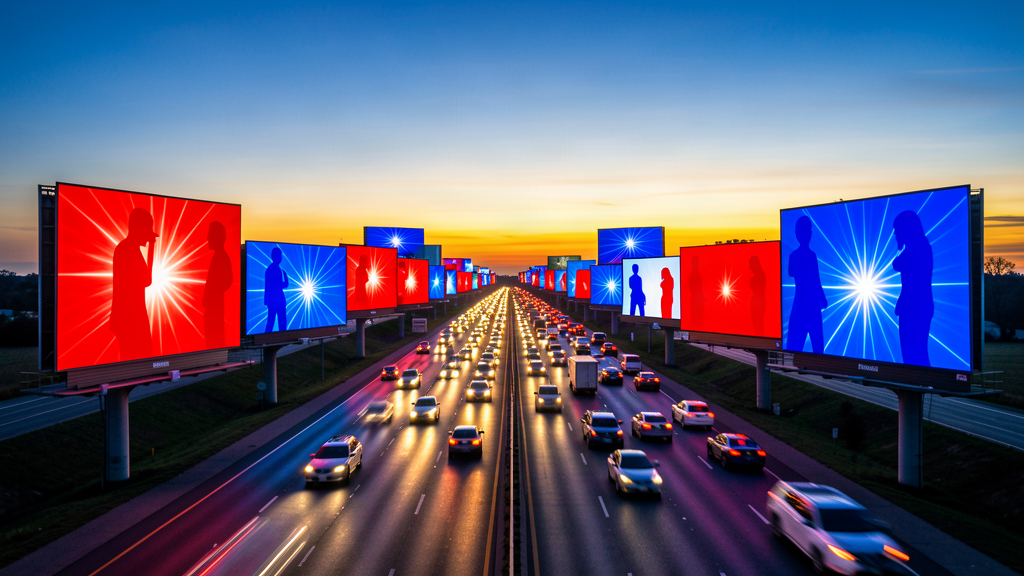
WASHINGTON — On Wednesday the 2026 midterms officially became the most expensive advertising campaign in the history of the American republic, crossing $10 billion in television, radio, digital, and billboard spending, with the final tally projected to land somewhere north of $11 billion. Most people see a number like that and feel something they can’t name. What they’re feeling is pride.
1. The Math Works Out Beautifully
Ten billion dollars, spread across roughly 340 million Americans, means every man, woman, and child has personally sponsored about a third of one attack ad against a stranger they will never meet. That’s not waste. That’s a group gift.
The old record belonged to 2022, which feels almost quaint now, like remembering when the family only rented the bounce house. This year we bought the bounce house. We put it in the yard permanently. The neighbors have stopped asking.
2. It’s a Job Creator
That’s Dale Prochaska, a sign installer out of Green Bay, where demand for roadside advertising has reached what he generously called “a beautiful emergency.” The ad industry employs printers, producers, media buyers, and the specific type of actor who points at a photograph of a stranger and says “his record on nothing” with total conviction. All of them are working this fall. All of them are eating well.
3. Nobody Actually Watches Anymore, Which Is the Point
Critics love to observe that nobody sits down to watch political ads anymore, that they are skipped, blocked, muted, and walked through. These critics are describing the system working exactly as intended. An ad you don’t watch is an ad that has already been paid for, which is the only kind of ad the American economy has ever truly believed in.
And while the campaigns spend their ten billion, a separate controversy continues over roughly $22 million in taxpayer-funded spots that a federal judge recently told the administration to pull off the air. But that’s a rounding error, and rounding errors are how people get ideas.
THE $10 BILLION, AT A GLANCE
- Per American: about $29, or two tankards of the beer you drink while muting the ads.
- Per undecided voter: somewhere around $400, assuming undecided voters exist, a premise this budget has wisely declined to test.
- Compared to 2022: up nearly a third, proof that the best way to fix a record is to break it again, harder.
4. What the Skeptics Miss
The cynics call this an arms race. An arms race implies two sides shooting at each other. This is closer to a potluck: everyone brings something, nobody eats it, and the host counts it as a success.
Come November, someone will win an election on a budget that could fund a small navy, and the winner will give a victory speech about fighting for the working family, live, unscripted, and — for approximately ninety seconds, until the first ad buy of the next cycle clears escrow — entirely free of charge.