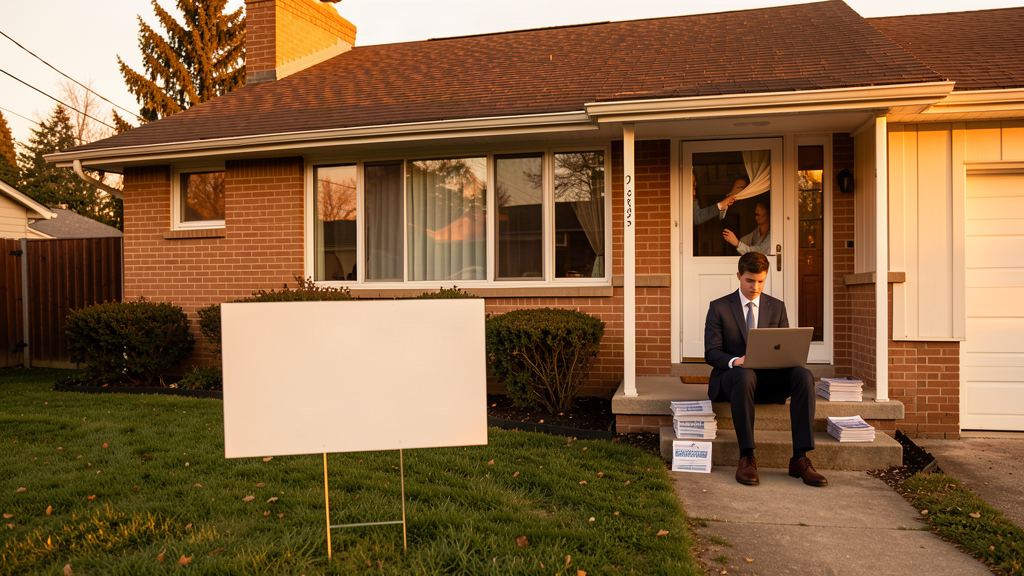
WEST HARTFORD, Conn. — Olaleye Onikuyide texted ahead that his bus was running late, and then arrived on time anyway, which is the sort of reliability Americans have come to expect from the rising political class. The 28-year-old Democrat is running for state representative. He also lives with his parents, which he says was a choice made to save money, and which his opponents say is evidence he has no address.
Both are true, and neither is the scandal. The scandal, if there is one, is that Onikuyide is not special. As NPR reported this week, a wave of Generation Z candidates from both parties is running for state offices while renting, roommating, or sleeping in the bedrooms they grew up in, and they are campaigning on the idea that this qualifies them rather than disqualifies them.
“We’re in the thick of it,” Onikuyide said, listing housing, gas prices, student debt, and a labor market that posts entry-level jobs requiring five years of experience and paying in exposure. “We might be the generation that is more educated and yet worse off than our parents.”
He was discovered as an affordability candidate the way a record label discovers a band: too late, and now there is a crowd. Asked whether he had been worried about housing before it was polling well, he gave the most honest answer of the fall campaign season.
Down the road in New Haven, Eli Sabin, 26, conducted his campaign interviews in a quiet room inside City Hall, where he has already served on the Board of Alders — “our old-fashioned term for the city council,” he explained, and New Haven is a town that keeps its old words the way some families keep a spare key under the same rock since 1974. Sabin spent his college years rewriting zoning rules to allow denser development. He is running for state representative. He does not own a house in the state. His opponents, out of options, have begun pointing this out at press conferences, which is a press conference about math.
The phenomenon reaches deep into the red as well as the blue. Lukas Schubert, 21, is seeking re-election to the Montana House of Representatives, a state whose land prices have risen so steadily that the party of property rights now fields a candidate whose assets include a truck and a very supportive aunt. Republican consultants, who once insisted that homeownership polled as the price of admission to public office, have quietly updated their decks. A senior GOP strategist briefed on the new messaging, Dale Rusk, said the numbers were unambiguous: “Voters under thirty don’t rent because they’re confused. They rent because they did the math. So now we rent too. It’s called listening.”
Democratic consultants discovered the same constituency about six weeks after the Republicans did and are describing it as though it were undiscovered territory, the way miners describe a mountain. Several super PACs are reportedly developing outreach programs for renters, and at least one donor, speaking publicly as donors do, has proposed that young candidates pool their down payments through a political action committee — a solution that would fix housing the way a second belt fixes a second belt.
Onikuyide’s own platform is less creative and more effective: mixed-income housing, walkable cities, density that makes transit worth building. He knows the longtime-resident objections, and he intends to lose that argument slowly, in public, over a decade.
They are not behind on adulthood. They are ahead on arithmetic.
His campaign manager drove. The bus was on schedule either way.