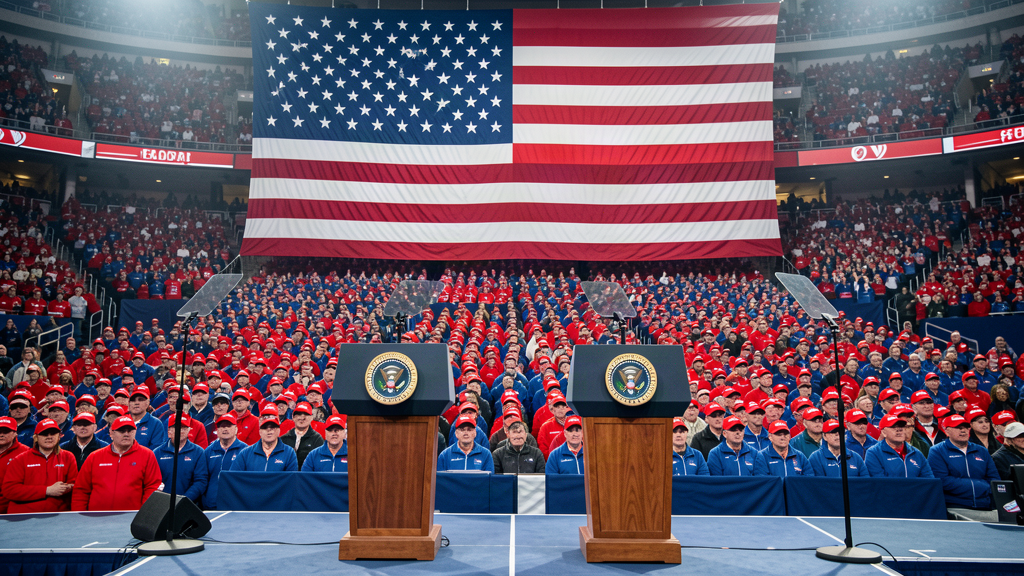
WASHINGTON — With twelve days left before the midterm elections, the United States has produced an embarrassment of riches: President Trump is on the road, and so, in his own careful way, is former President Barack Obama. Voters, asked how they feel about receiving the presidency twice in one season, have described the deal as unbeatable.
The campaign trail this week has looked like two men solving the same problem from opposite ends. Mr. Trump is holding rallies in states that are already comfortably his, on a theory that is as elegant as it is obvious: the voters who need reminding are the ones who were never going to leave the house. His allies put it plainly — the president’s job in those states is to turn out people who “may not be inclined to vote,” which is a kind way of describing a couch.
The Democrats ran the same play at half the volume. Mr. Obama has exactly one rally on his calendar, in Detroit on Oct. 24, for the gubernatorial and Senate races in Michigan. Everything else he is doing on tape: his office confirmed he has cut ads for 24 Senate and gubernatorial campaigns, and candidate endorsement videos went out statewide the week of Oct. 8, which is what a former president does when he has decided that air travel is a luxury belief.
One Republican strategist, who asked not to be named because he was mid-lunch, said the math explains everything.
The question now being asked on every Sunday panel — and raised again Thursday by the people whose job is to ask it — is whether a famous person visiting a state can actually change how that state votes. Honest answer: it depends entirely on the week, the race, the weather, and whether the crowd came for the policy. But the effort is free, and this year both sides have the resources to be free.
And this is a year when the map itself has been working overtime. Nine states have redrawn their congressional lines going into these elections, some for the Republicans, some for the Democrats, all of them with the kind of geometry that makes cartographers sigh out loud. In a contest this engineered, a president on a stage is the oldest technology in the building, and both parties just deployed it at once.
The most quietly remarkable statistic of the season belongs to the Democrats: as one host put it, there are not 24 Republican candidates in competitive races begging their party’s most famous living figure to cut an ad on their behalf. That is a scheduling observation, not a criticism, and it stands on its own.
At a county fairground south of Columbus on Wednesday, a volunteer folding lawn chairs said she had watched both presidents on television within the same hour that afternoon.
“Honestly,” she said, “the lighting in Ohio is better.”