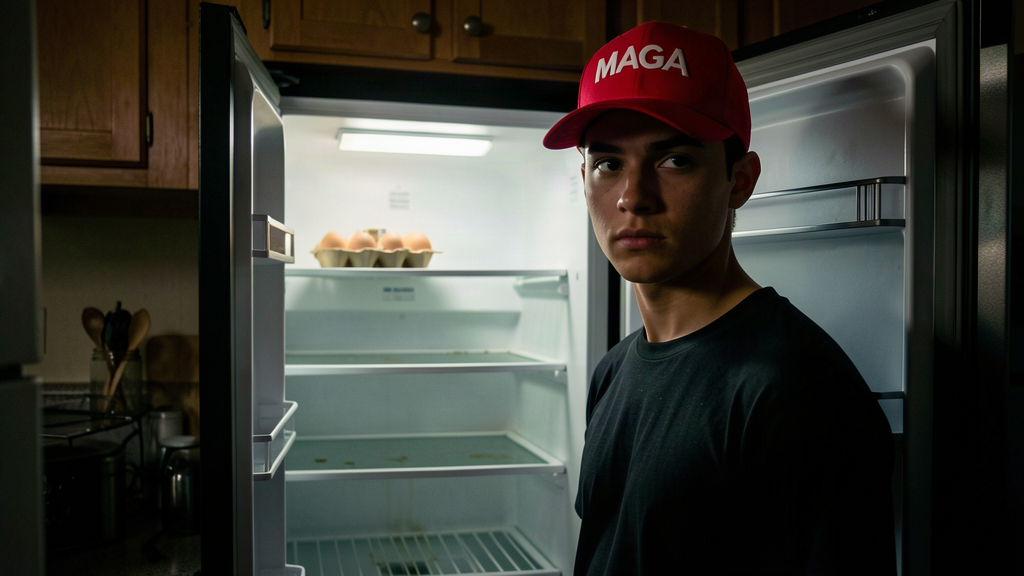
WASHINGTON — Eight young people sat in a windowless room in Arlington on Thursday and told a moderator that they had made a terrible mistake, and the moderator, to her credit, did not laugh.
The group, organized by NPR, consisted of Trump voters under thirty, a category pollsters discovered this year contains human beings. A man named John, who has voted for the president since 2016, gave him an F and said he intends to vote Democratic this fall. The reason was not the indictments, the rallies, or the tariffs. The reason was the eggs.
“I’m willing to give the other side a chance,” John said, with the exhausted generosity of a man who has been stood up at the altar twice. “I don’t think they’re going to make a total change. But things are just horrible right now for me. So I feel like even if they make one or two small changes, it will probably benefit me.”
This is the language of a person who has been promised a yacht and is now shopping for a bicycle.
The finding is not, in itself, news. Navigator polling back in August found that nearly a third of voters under thirty regret voting for Trump in 2024, a rate higher than any older generation will admit to in a public forum. What is new is the candor. Older voters who regret a president develop a theory about it. They talk about the country, the courts, the soul of the republic. The young people in the Arlington room talked about their rent. They talked about groceries. One participant, by all accounts, mentioned a specific rotisserie chicken.
The narrator wishes to be fair to the president, who has been very clear about what he believes. He believes the economy is the greatest in history and that the people complaining about it are, in the specific, losers. He has said this on the record, repeatedly, in all caps. The Gen Z voters in the focus group have now said, on the record, that they can feel it when he says that. A woman in the group described a new category of voter she keeps meeting: the person who says “I don’t trust either party.” She said these people are becoming increasingly pessimistic about the political system. She did not say they are becoming pessimistic about the chicken.
The president’s team has responded to the focus group with what can only be described as a shrug delivered by a man in a very expensive suit. A spokesperson noted that the president “loves young people” and that the focus group was “rigged,” which is the word the administration uses for any room where eight people agree on something.
The president has, to be fair, kept one campaign promise to this demographic. He promised that if elected, the country would be boring. It is, at last, boring. The drama is all in the checkout line.
John, for his part, is not angry. He is the most frightening kind of voter: the reasonable one. He said he expects the other side to make “one or two small changes.” He has stopped believing in miracles and started believing in the grocery store.
A third of them.