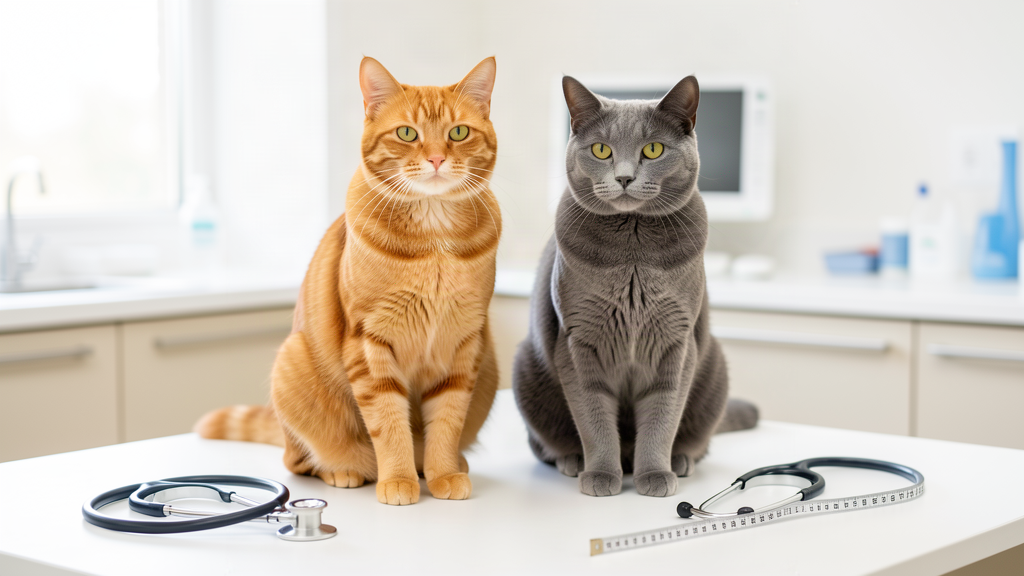
ITHACA, N.Y. — Researchers at Cornell University have documented the first known cases of Marfan syndrome in domestic cats, in two brothers named Gary and Shaggy, and the scientific community is calling it a breakthrough while the cats are calling it, by all available evidence, absolutely nothing.
Marfan syndrome is a genetic connective-tissue disorder in humans, famous for long limbs, long fingers, and tall, thin builds. It has been described in horses, in dogs, and in at least one very tall uncle at every family reunion. It had never been molecularly characterized in a cat — until Gary and Shaggy arrived at the veterinary college with unusually long legs and a genetic test that made history.
The discovery, published in Scientific Reports, matters because cats may now serve as a model for studying the human disease, which means that somewhere in upstate New York, two house cats are quietly advancing human medicine while refusing to do a single one of the things cats are supposed to do, like knock over a glass on purpose.
The medical details are genuinely useful. Marfan syndrome weakens the connective tissue that holds the body together, affecting the heart, the eyes, and the skeleton, and having a cat model could help researchers understand the disease and, as the Cornell College of Veterinary Medicine noted, eventually help both cats and people. This is the rarest kind of scientific story: everyone wins, and nobody had to be asked to stand up for it.
GARY AND SHAGGY: A BRIEF DOSSIER
- Condition: Marfan syndrome, first molecularly confirmed case in domestic cats.
- Physical traits: unusually long legs, the feline equivalent of being 6'4" in a phone booth.
- Temperament: reportedly unbothered, which researchers say is "a very cat thing."
- Scientific value: a potential model for a human disease, achieved entirely by being cats.
- Compensation: treats and a sunbeam, paid weekly.
Some say the breakthrough will accelerate human treatments. Others say veterinary genetics is the next frontier of medicine. The truth, as always, lies somewhere in a third position I just invented: the cats knew before we did, and have always known, and have simply been waiting for us to catch up with the paperwork.
At press time, Gary and Shaggy were reported doing extremely well, napping through their own press coverage, which scientists say is the correct response to any medical diagnosis.