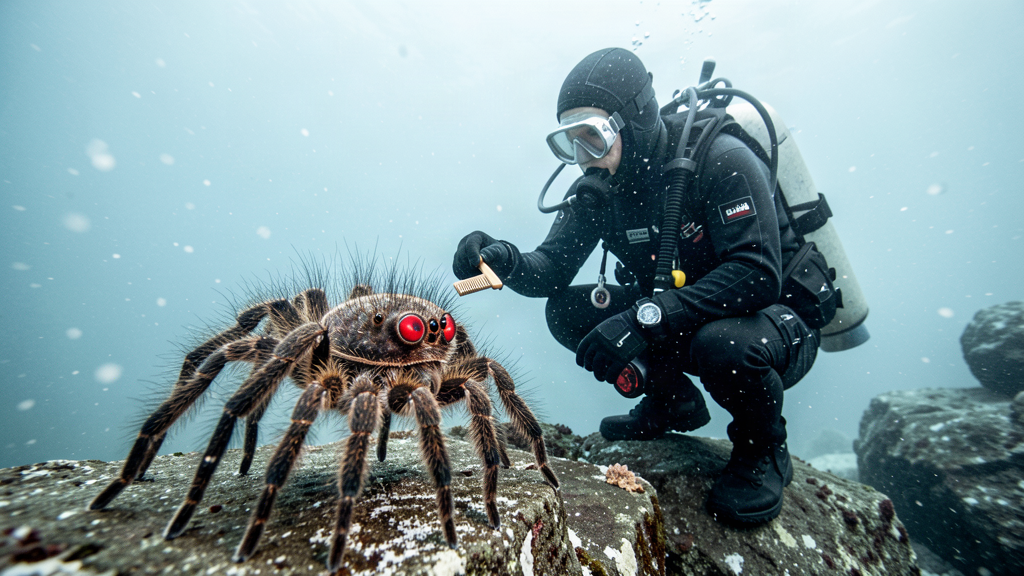
VANCOUVER, B.C. — In a discovery that marine biologists are calling “the most thorough small-crustacean event in the Salish Sea in nearly a century,” researchers at the University of British Columbia have identified two previously unknown species of sea spider, one of which has red eyes, spine-covered legs, three lips, and — as one lead author put it — “a very strong opinion about personal hygiene.”
The creatures, which were cataloged during scuba dives between 2023 and 2024 at depths of up to about 18 meters, were announced this week by UBC and described in widely shared reporting as “nightmare fuel,” a term one of the researchers said was “accurate, and I would stand by it.”
TWO NEW SEA SPIDERS, AT A GLANCE
- Callipallene pilosuspedes: Red eyes, hairy legs, three lips, and the ability to groom itself with comb-like appendages.
- The other one: Cannot groom itself well, and is frequently covered in debris and smaller hitchhiking organisms.
- Depth: Found between 59 feet and the seafloor.
- First new Salish Sea sea spiders: In nearly 100 years.
The grooming species has drawn the most attention. Researchers say the creature uses a set of comb-like appendages to clean its own legs, a behavior that one biologist compared, in an interview, to “a very small, very wet person with a very good routine.” The second species, by contrast, was described as “a little less put together,” and was frequently observed carrying a visible collection of hitchhikers, which the team said it “seems to tolerate.”
The findings have been celebrated as a reminder that even well-studied coastal waters can still hold surprises. “The Salish Sea is not a new place, but it is still a place with things in it that we have not met,” one of the researchers said, before adding, “and some of those things are, frankly, a lot to look at.”
At press time, the team was reported to be drafting a follow-up survey to determine whether either species has, in the intervening months, developed what one colleague described as “an attitude,” a question that is, as far as the journal is concerned, still open.