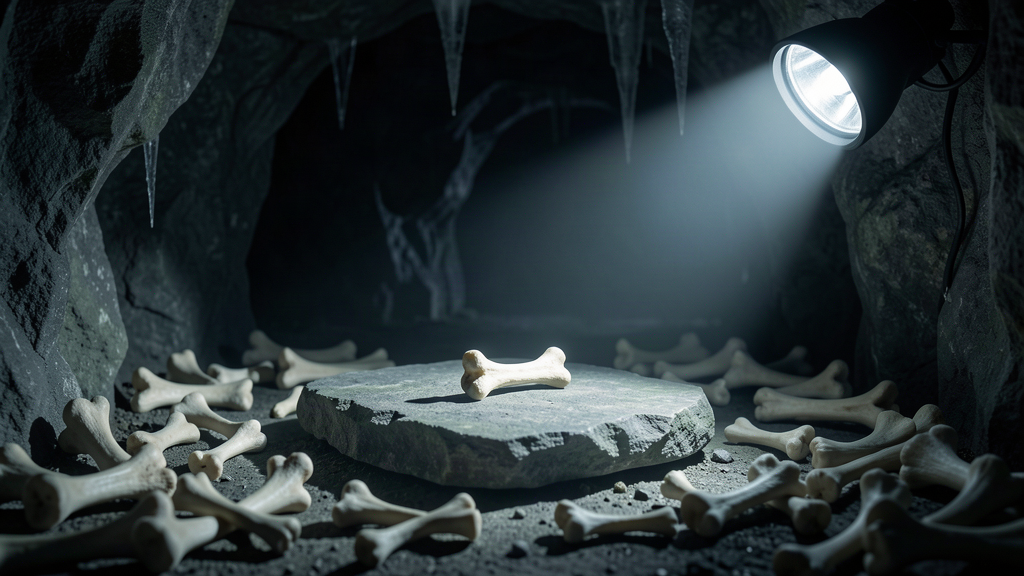
HARBIN, China — For fifteen years, scientists knew the Denisovans mostly by their DNA. Now they have an arm — well, a 1.7-inch piece of one — which is, in the specific, the first long limb bone ever found from the extinct human relative, and which was, in the specific, sitting in a cave in southwestern China for roughly 40,000 years before anyone noticed.
The fragment, a forearm bone from what researchers call the “Dragon Man” lineage, was pulled from Bianfu Cave, a bat habitat in the region, and identified as Denisovan after a search that, per Discover, went through about 60,000 bone fragments. The team has, in the specific, found a finger, a rib, a molar, and, now, a forearm. That is, in the specific, the whole of the Denisovan body, and it is, in the specific, the part that is making the researchers quiet in a way that researchers do not usually get.
The bone shows, per the team, similarities to Neanderthal characteristics but is shaped more like a human forearm, which is, in the specific, the sort of finding that does not resolve the question of what a Denisovan looked like, and which, in the specific, deepens it, in the way that good science does, and which, in the specific, is the part that the bat cave is, in the specific, not responsible for.
The Denisovans, for context, are the cousins. They lived across Asia, they interbred with our own line, and a small percentage of the DNA that is in most of us, right now, came from them. They are, in the specific, the reason you are, in the specific, a little bit Denisovan, and which, in the specific, is the part that is, in the specific, the finding that the 40,000-year-old bat cave has, in the specific, been sitting on.
THE DENISOVAN BODY, AS OF THIS WEEK
- 2010: DNA from a finger bone, Altai Mountains. The species is announced. The face is, in the specific, not there.
- 2018: A cranium, the "Dragon Man," is linked to the Denisovans. They get, in the specific, a face and a name, Homo longi.
- 2019–2025: A jaw from Tibet, DNA from sediment, a molar from Laos, a jaw from Taiwan. The body, in the specific, stays small.
- This week: A 1.7-inch forearm from a cave in China. The first long limb bone. The researchers, in the specific, get quiet.
The study also reports stone tools and, per the team, evidence of how the group ate, which is, in the specific, the part that turns a bone into a life, and which, in the specific, is the part that the cave, in the specific, has been keeping for 40,000 years. The cave, for its part, has not commented, which is, in the specific, the standard position of a cave, and which, in the specific, is the part that no one is going to change.
At press time, the forearm was in the lab, the other 59,998 fragments were, in the specific, still in the cave, and the researchers had, in the specific, not yet said what the next bone would be, which, in the specific, is the part that everyone is, in the specific, waiting to hear.