TEN SLEEP, WYOMING — Science has a new species, and science would like to state, formally and in Latin, that it is chunky.
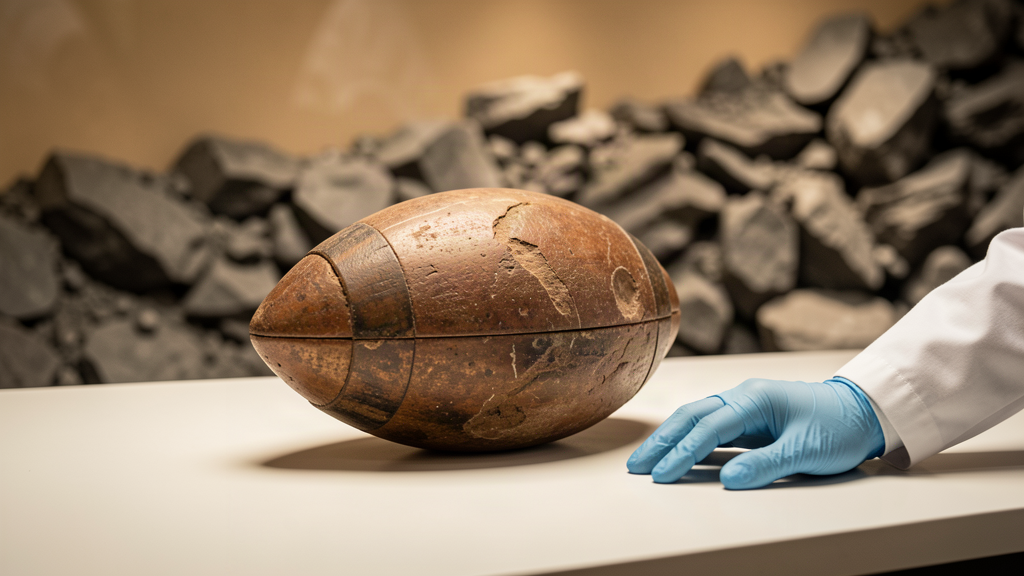
The animal is Wyoteuthis linsterorum, a belemnite — a squid cousin with a bullet-shaped internal skeleton — whose rostrum grows ten centimeters long and up to six centimeters wide, making it, in the words of the paper that finally describes it, the thickest belemnite ever recorded. The living animal swam the Sundance Sea about 160 million years ago and, by proportion, reached nearly two feet end to end. It was, in short, a squid with a core.
The discovery took thirty years, which is how paleontology does everything. One specimen was found in the late 1990s and sat in a museum drawer, unremarked, for years. The second arrived in 2019, donated by a local fossil collector named Cliff Linster, and only when the two chunky bullets lay side by side did researchers recognize they had a new species. The paper named it after Linster’s family. Cliff died in June, a few weeks before the paper came out, which is the part of the story that makes the chunkiness feel earned.
“People ask why it took so long,” said a museum spokesperson with the weariness of someone who has answered this at every podium in Wyoming. “Because it was in a drawer. Science is 10 percent eureka and 90 percent filing.”
The question every journalist was assigned to ask — why so fat? — has a real answer and a better one. The real answer involves the Jurassic Sundance Sea, a shallow inland ocean where a heavy, barrel-shaped skeleton may have served as ballast, letting the animal hover in the water column like a very patient helicopter. The better answer is that evolution looked at the squid, looked at the calendar, and said: what if it had opinions about lunch.
WYOTEUTHIS LINSTERORUM: THE VITALS
- Rostrum: 10 cm long, 6 cm wide. The widest ever measured in its group.
- Full body: Roughly 60 cm, arms included, which is a forearm of squid.
- Weight class: Heavyweight. The fossil record has no comparable.
- Habitat: The Sundance Sea, which covered Wyoming when Wyoming was a bathtub.
- Time in the drawer: Longer than most graduate programs.
- Namesake: Cliff Linster, collector, of Ten Sleep, who found the second specimen and never had to explain it to a single reporter.
Paleontologists note that “chunky” is not a technical term, and then, in the paper’s own words, use it anyway, because the specimen leaves no alternative. Taxonomy has named species after horns, teeth, and saints. This one is named for girth, and girth carried it through three decades of obscurity into a journal.
At press time, the Wyoming Dinosaur Center confirmed the original specimen remains on display, and that visitors photograph it at the same rate as the dinosaur bones, because a two-foot squid with a barrel chest is the one prehistoric animal every visitor recognizes themselves in.