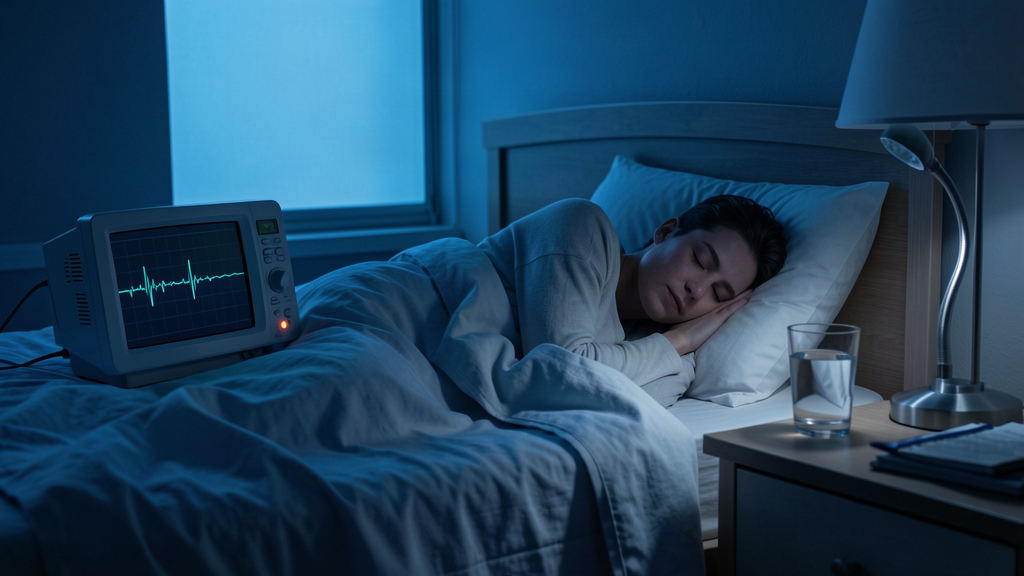
LIEGE, Belgium — Researchers have found that the number of times a person briefly stirs during the night, a phenomenon so common it has its own name and no cure, may be a quiet signal of a person’s genetic risk for Alzheimer’s disease, years before any memory problem shows up. The study, from the GIGA ULiège laboratory at the University of Liège and published in the journal Sleep, is the kind of finding that is, in the field, described as “important,” and, in the bedroom, described as “why did I get up.”
The so-called micro-awakenings are, as the researchers explain, extremely brief. The brain becomes partially awake for a few seconds, the person does not fully wake, and the sleep cycle is, in the researchers’ word, “disrupted.” For the middle-aged participants in the study, a higher frequency of these small awakenings was associated with a higher genetic risk for the disease. For the younger participants, it was not, which the team has described, with a delicacy the field has come to rely on, as “an interesting age-dependent effect.”
The practical upshot, per the researchers, is that a habit most people treat as a minor inconvenience — the 3 a.m. wander to the bathroom, the unexplained blink-open-and-close, the moment you are certain you heard the house and were not certain you did — may be, in some people, a very early and very quiet piece of data. The study does not say the awakenings cause the risk. It says the two travel together, which is, in the vocabulary of the field, the difference between a door and a hallway, and a distinction the researchers are, at this writing, not in a hurry to blur.
THE STUDY, AT A GLANCE
- Micro-awakenings: a few seconds of partial waking, so brief the sleeper is, in most cases, unaware of them, which is, per the team, “the interesting part”
- Association, not causation: the awakenings and the genetic risk were found traveling together, which is the field’s careful word for “we do not yet know which is pulling which”
- Age-dependent: the link showed up in middle-aged adults and not in younger ones, a result the researchers are treating as “a signal to be understood” rather than a headline to be rushed
- The bathroom, which has been, for decades, the most-visited room in the human sleep experience, is now, per the study, “a site of interest”
- The journal, Sleep, which has published the finding, is, in a sense, the room the study is about, and, per the team, “the appropriate venue”
The finding has been welcomed by the sleep world, which has spent years arguing that the night is not “down time” but a working shift, and by the genetics world, which has spent years arguing that risk is not a single number but a slow, quiet negotiation. The two camps are, per the study, now in a conversation, and the conversation is, per all accounts, going better than either expected.
At press time, the researchers had issued a gentle note that the study was about patterns, not prophecies, and that a single bad night is not, in the language of the field, a diagnosis, but, in the language of the person who had the bad night, is, at this hour, still a bit much.