There is a new bird, and it never asked to fly.
Chinese scientists have described Yuezhuornis yangyuanensis, a crow-sized bird from 150 million years ago whose short wings and long legs mark it, they report, as the earliest known member of a bird lineage that gave up flight entirely.
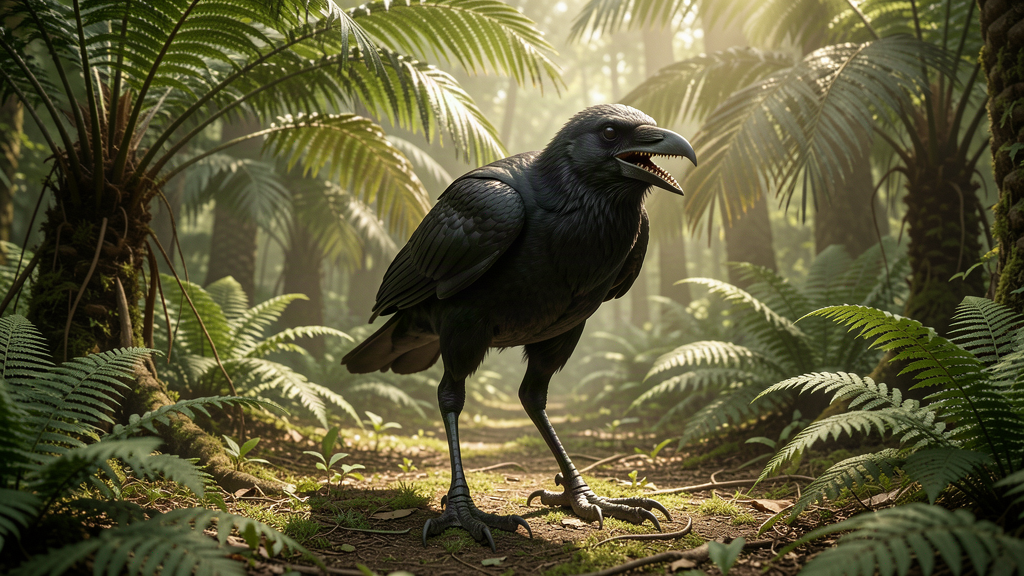
1. The bird. Roughly the size of a crow, fully feathered, with the general confidence of a crow. Its wings, the research notes, were unusually small for a bird and appear to have been perfectly adequate for a bird that was finished with all that.
2. The legs. Long, strong, and built for the ground — the anatomy of a runner rather than a glider. The animal moved the way a linebacker moves: with opinions about terrain.
3. The teeth and the claw. The mouth held rows of small sharp dinosaur teeth, and each foot carried a large curved sickle claw, the kind researchers describe, in careful academic language, as well suited to seizing prey. It is the sort of mouth no one has ever successfully argued with.
4. The finding. The specimen challenges the assumption that the earliest birds were all built primarily for flight. Some branches of the family tree, it turns out, concluded early that wings were a startup phase.
“It reorganizes the family portrait,” said Dr. Renata Vogel, a paleontologist who reviewed the specimen, of a discovery that puts flightless birds on the record 50 million years earlier than expected. “Some lineages looked at the sky, did the math, and went back to the good ground. Honestly, the decision deserves respect.”
Modern birds may wish to take notes. Pigeons, who fly badly into glass for a living, have no altitude to lose and yet spend their days acquiring it. A bird that fully commits to walking has, at least, a plan.
The species is known from a single fossil, held in a locked cabinet, waiting out the same 150 million years that produced it. It had the legs of a runner, the mouth of an argument, and a schedule with no flights on it, and by every measure available to paleontology, it was thriving.