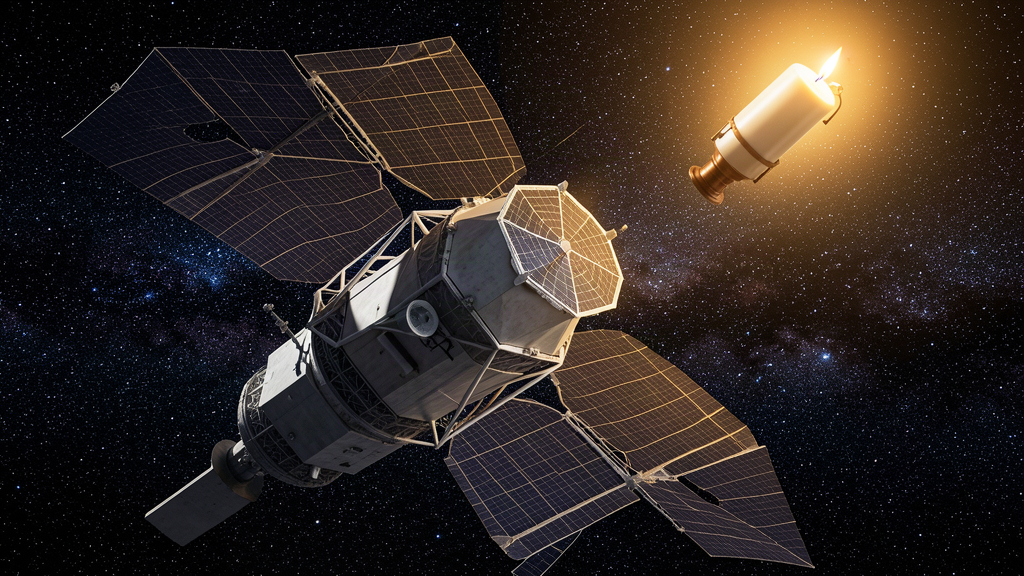
GREENBELT, Md. — NASA’s Roman Space Telescope, which is in space, and which is, in the specific, in space with a fuel supply, is, in the specific, still in space, and it is, in the specific, going to stay there. The space agency has confirmed that the telescope carries enough propellant for at least 22 years of science operations, more than double its original 10-year design life, and the reason the number is 22 and not 10 is, in the specific, a reason the agency has described in a word that this desk has not seen NASA use before, which is “exquisite.”
“The result of exquisite planning by our orbital dynamics team, brilliant execution by the operations team, and a precise launch from SpaceX is that Roman has at least 22 years of potential science operations in fuel,” said Jamie Dunn, the director of NASA’s Goddard Space Flight Center, which is the complete sentence, and the sentence is, in the specific, the article, and everything below this line is, in the specific, the same thing in more detail.
The mechanism is as follows. The spacecraft, which was built lighter than expected, left the ground with room in the propellant tanks for more propellant than the design had planned for, which is, in the specific, what a tank that is lighter does. The first engine burn, which was, in the specific, the burn that was budgeted, used less than nine percent of the fuel that the budget had allotted to it. The two facts, in combination, have produced a telescope that is, in the specific, out of its original design life by a factor of two and a quarter, and that factor is, in the specific, the number that the press release is built around.
For the record, the comparison the agency is making is with the James Webb Space Telescope, which is at the same destination, the Lagrange point two location, which is, in the specific, where Roman will join it. The two telescopes are, in the specific, neighbors now, and the neighbor relationship has, in the specific, produced a comparison: Webb is the telescope with the famous infrared eyes, and Roman is the telescope with the smaller gas bill, and the gas bill is, in the specific, the part of the comparison that has a 22 attached to it.
ROMAN'S FUEL ECONOMY, BY THE NUMBERS
- Design life: 10 years, which is, in the specific, what the paperwork said before the launch.
- Confirmed fuel supply: at least 22 years, which is, in the specific, what the tanks say after the launch.
- First trajectory burn: under 9 percent of budgeted fuel, which is, in the specific, the "exquisite" part.
- Extra propellant at launch: the result of the spacecraft being lighter than expected, which is, in the specific, the "brilliant execution" part.
The operational consequence is that the telescope is now, in the specific, guaranteed to outlast the political cycle that launched it, which is the kind of guarantee that a government instrument does not usually have, and the consequence is, in the specific, the reason the announcement was, in the specific, an announcement. A space telescope with a 22-year fuel supply is, in the specific, the only piece of federal hardware that is certain to still be operating in a year that has not yet been scheduled, and the certainty is, in the specific, the certainty that the agency is, in the specific, proud of, because the agency is, in the specific, the kind of agency that uses the word “exquisite” about its own orbital dynamics team, and the team is, in the specific, the kind of team that gets to keep its fuel.
At press time, Roman is at its destination, it is doing science, and it is, in the specific, using the fuel at the rate of less than nine percent per budget, which is, in the specific, the rate that makes the number 22, and the number 22 is, in the specific, the number.