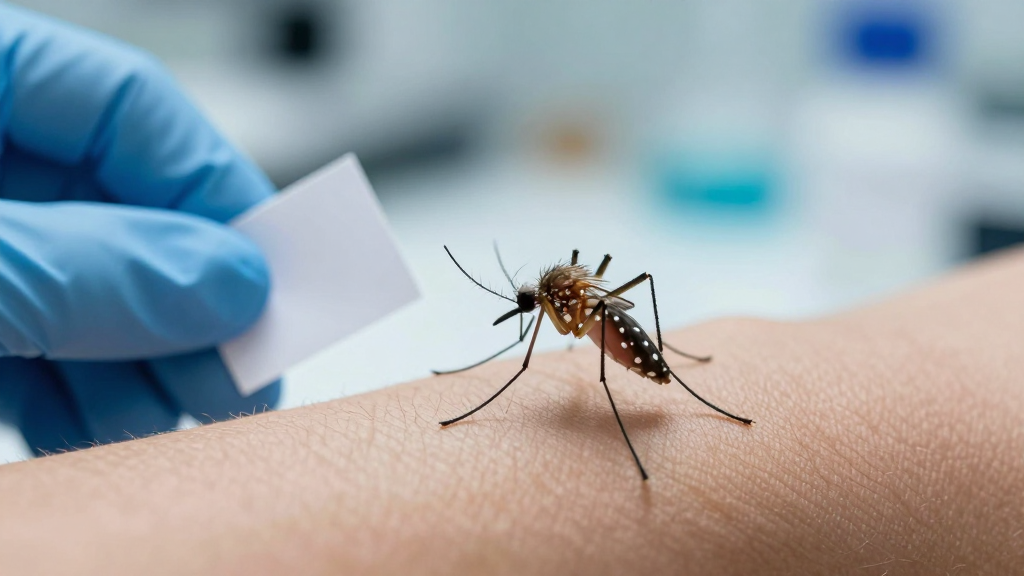
For years, the mosquitoes of America bit their victims at random, out of what appeared to be indifference. It was not indifference. It is cuisine.
Researchers at Florida International University, publishing a study in the journal iScience, have confirmed that different mosquito species prefer different people, and that the preference is written in the passenger list: the community of bacteria living on your skin. The team exposed volunteers to three mosquito species, measured who got landed on, and found the insects arriving in shifts, each species working its way down a menu the human race had never known was printed. The species with a taste for you, it turns out, travels with telltale bacterial passengers of its own.
“We didn’t expect the species to prefer different people when we started the study,” FIU researcher Carrasco Marrero said. “Each species having a distinct microbial signature that they use as a cue was so surprising to me.”
The finding settles, at long last, the backyard dispute that has ended more friendships than the last three elections. The person who gets bitten eleven times at the lake while the person beside him goes untouched has not been cursed, cursed again, or left out of a deal. He has been reviewed. The insects have standards, and he, statistically, is not to their taste — a verdict delivered by a creature whose entire nervous system fits on a period at the end of this sentence.
The practical prize, the researchers say, is better repellents and smarter control of the species that actually matter in a given region, instead of the current approach, which is spraying everything and hoping. The researchers hope the finding “provides a foundation” for tailor-made interventions. This desk hopes it provides a foundation for something else: the annual neighborhood barbecue where, for the first time, the swatting can be done with the confidence of a man reading a menu rather than apologizing for his own existence.
One consolation, offered freely: unattractiveness to mosquitoes is not a compliment from the animal kingdom. It means you have failed, on chemistry alone, to be interesting to an animal whose ambition is a thimble of blood and no memory of your name. The bitten, meanwhile, are the ones with flavor. History is not always kind to the flavorful, but it does notice them.
The study analyzed three species. There are roughly 3,500. The menu, in other words, is three appetizers deep, and reservations, accordingly, are already booked nationwide.