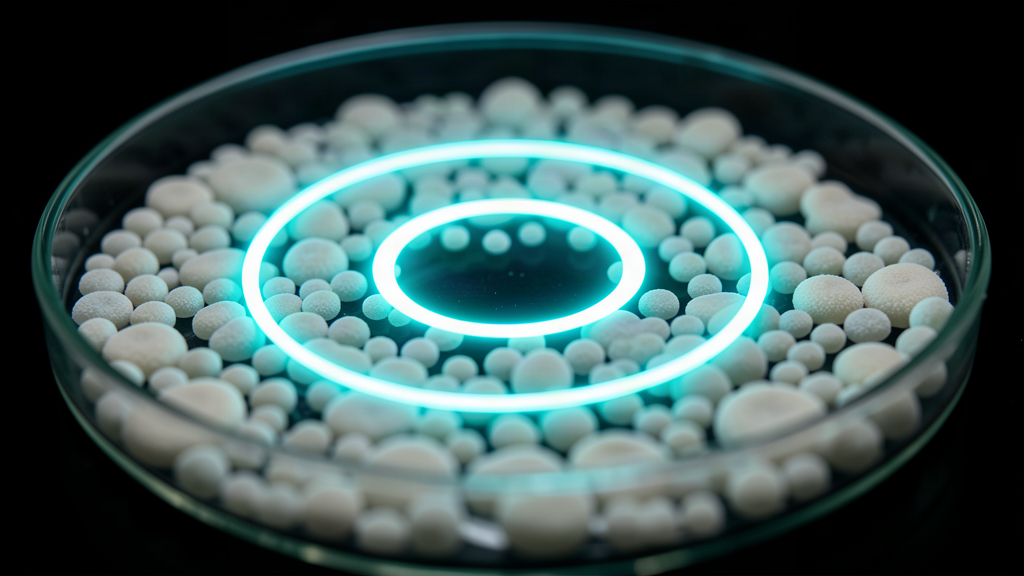
A bacterium, it turns out, will not wait for a second opinion. Researchers announced this week they had found a new way bacteria detect a viral attack: the virus brings its own enzyme into the cell, the enzyme accidentally cuts a bacterial sensor protein, and the bacterium reads that cut as a death sentence and detonates itself before the virus can finish copying. The cell dies. The colony lives. Nobody voted.
The finding matters because it inverts the usual story. We think of the immune system as a thing that fights. This system fights by leaving. “The bacterium is not losing the battle,” said one of the researchers, who has spent a decade watching single cells make the single largest decision available to a single cell. “It is refusing to be a building the enemy can move into. It burns the building down while the enemy is still carrying the furniture in.”
The elegance is in the trap. The bacterium does not need to recognize the virus. It does not need to know what a virus is. It only needs to notice that something it built has been cut, and to treat any cut to that part as proof of an intruder. The virus, by simply being itself, signs its own eviction notice and its own murder warrant in the same motion. “The pathogen’s own weapon is the alarm,” the researcher said. “We did not design that. We just finally got good enough at looking to notice it was always there.”
There is a part of this that is hard to say out loud in a science article, which is that the cell’s behavior reads, to a human, like courage. It has no idea it is saving the colony. It has no idea a colony exists. It runs a single line of chemical code that says, in effect, if this part is broken, end now, and the part is broken the instant the virus arrives. And yet the result, billions of times a day, in every pond and gut and drop of milk on Earth, is that the infection stops at one door. The researcher was asked whether the word “sacrifice” was fair. “It’s not sacrifice if it’s automatic,” she said, then paused longer than the question needed. “But I’ll tell you, after ten years of watching it, I have stopped being comfortable with the word ‘automatic.’”
The practical upside is phage therapy: bacteria-killing viruses as a last resort against drug-resistant infections, a field that has been quietly waiting for a way to predict when the bacteria will quit first. This discovery hands it a lever. If you know the sensor, you can flip it. You can make a bacterium decide, on schedule, to be a martyr.
The paper is long and full of protein names. The finding is one sentence: the oldest defense in the living world is a smoke alarm wired to the burglar’s own crowbar.