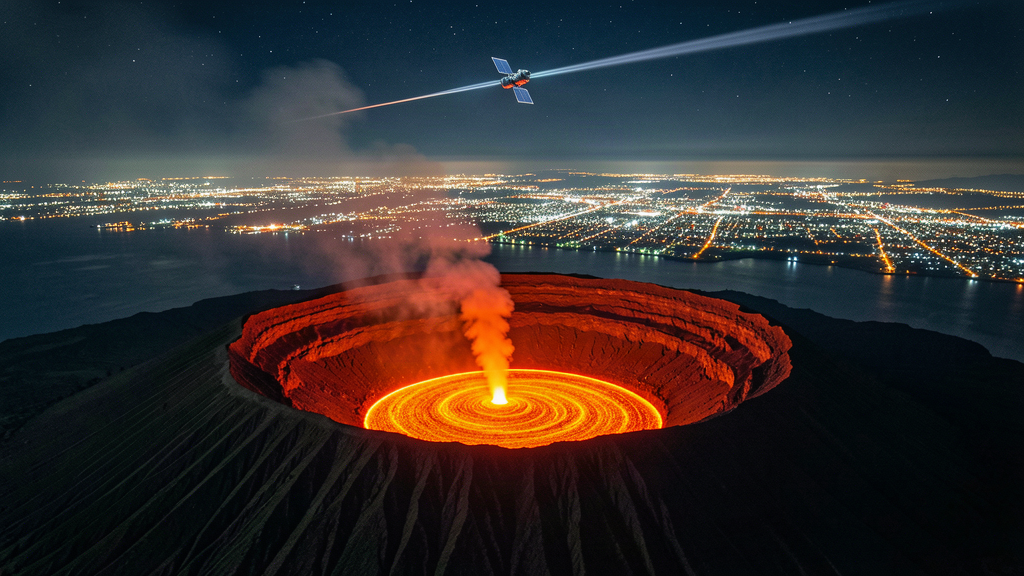
MANAGUA, Nicaragua — The Masaya volcano has some good news about its own internal operations, and the scientific community is impressed by the candor. Satellite measurements have identified two active magma reservoirs beneath the volcano, a finding the researchers described, in the dry language of geophysics, as “Double Trouble,” which is the way one refers to a diligent employee’s second job.
The volcano sits near two million people, a fact the study mentions with the restraint of a man noting that the office microwave is shared. Masaya already keeps a lava lake, a famous one, the kind that draws tour buses; the new work shows the plumbing below is more elaborate than advertised, with ground movements indicating the deeper reservoir has kept expanding into April 2026. Masaya, in other words, has been inflating for months, on the clock, at a place of business, and has not filed for time off.
It is a model of diversified storage. One reservoir is not a reserve, it is a dependency; two reservoirs are a strategy. The Spanish priests who visited the crater in the 1600s called it the Mouth of Hell and dropped a wooden cross into it to keep the peace, and the modern record suggests they understood the workload better than the modern survey does: a volcano that runs a lava lake, a tourism program, a gas-emissions operation and, as of the new paper, two independently inflating magma systems, is not a hazard. It is a mid-size enterprise.
The region has lived with Masaya the way a family lives with a wood stove: fondly, and with a bucket nearby. The volcano is one of the few on Earth with a persistent lava lake, which means it has, for centuries, kept a visible flame burning — a reliability no other Nicaraguan institution can claim. The satellite record adds the quieter news that the lake is the showroom, not the warehouse. Beneath the spectacle, the deeper system has been quietly adding inventory, a fact that makes the volcano the rarest of workplace figures: the employee whose output exceeds the org chart and who asks for nothing, takes no vacation, and grows warm each April.
Seismologists will continue watching, which is a polite way of saying the volcano will continue working and they will continue taking notes. A volcano with one reservoir is a news story. A volcano with two is a profile, and Masaya has given this desk everything a profile needs: a public face (the lava lake, the tour buses, the cross from the 1600s), a back office (the deeper reservoir, inflating, on schedule), and a management that has never once issued a statement, taken a holiday, or slowed the line. The last measurement runs to April. The two reservoirs sit several kilometers down. The volcano has not taken a single day off since.