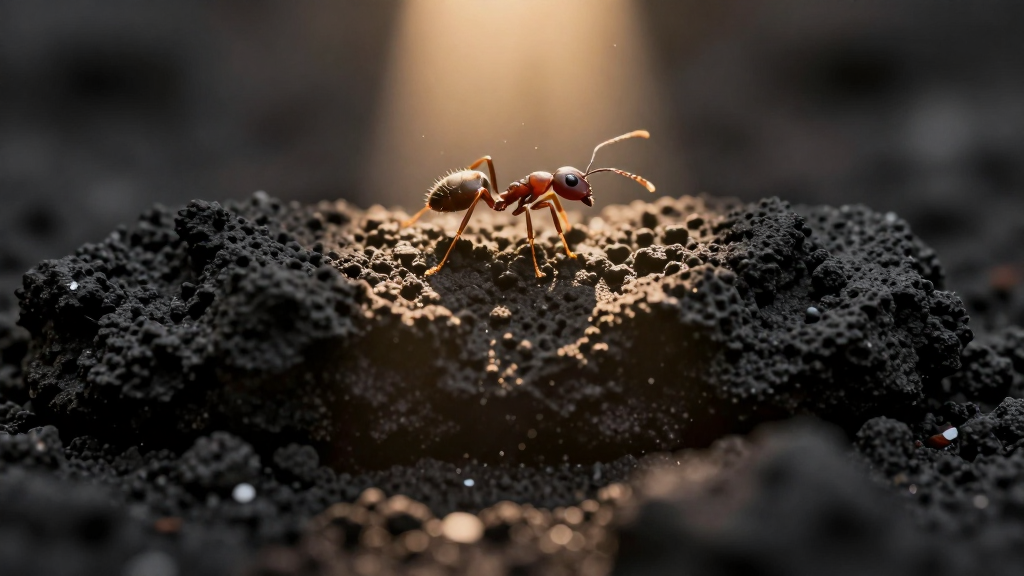
A new study has established what ant enthusiasts have long suspected on a feeling: the catastrophe that ended the dinosaurs was, for the ants, the single best thing ever to happen to them, and the ants have the paperwork now to prove it.
Researchers compared the genomes of ant species across the planet and found bursts of activity in so-called jumping genes — mobile snippets of DNA that move around a genome — in the period following the asteroid impact that ended the Cretaceous 66 million years ago. Those genetic bursts, the study reports, coincided with the rapid diversification of the major ant lineages, and may have sharpened the trait that made ants what they are: their extraordinary ability to talk to each other by smell.
The rock helped.
1. The vacancy
The impact removed the planet’s large animals and rearranged its climate. Forests regrew. Insects inheriting an emptied world is an old story; insects inheriting it twice, on purpose, is the new one. The ant family was already ancient when the asteroid arrived — ants had been around for tens of millions of years without setting the world on fire. Then the world opened, and the ants read the room.
2. The mechanism
The study’s authors describe jumping genes — transposable elements, in the technical language — as genetic shuffling that environmental upheaval appears to have triggered in bursts. According to the researchers, the team “found the genomic mechanism that connects these ecological upheavals to the subsequent rapid diversification of the ants”. Shuffled genes meant new scent receptors, new receptors meant richer chemical conversation, and richer conversation meant the one behavior that lets a hundred million individuals behave like one landlord: the pheromone.
3. The tenants
Today there are more than 15,000 known ant species, occupying every landmass except Antarctica, organized into colonies that wage war, farm fungi, enslave neighbors, and file complaints about picnics. The study situates the origin of that success not in the asteroid’s violence but in the ants’ reaction to it — a genomic lucky break, caught at the right moment, cashed immediately.
Evolutionary biologists note that the finding belongs to a humble genre of science news in which a study of the distant past explains a present annoyance. Nobody scheduled the asteroid. Nobody has to schedule the ants. Both facts were confirmed by people with grant numbers.
In a museum collection drawer in Copenhagen, where pinned ant specimens from a hundred and fifty years of expeditions sit in rows, a doctoral student is now running the gene-genealogy backward through those drawers, century by century, toward the burst.