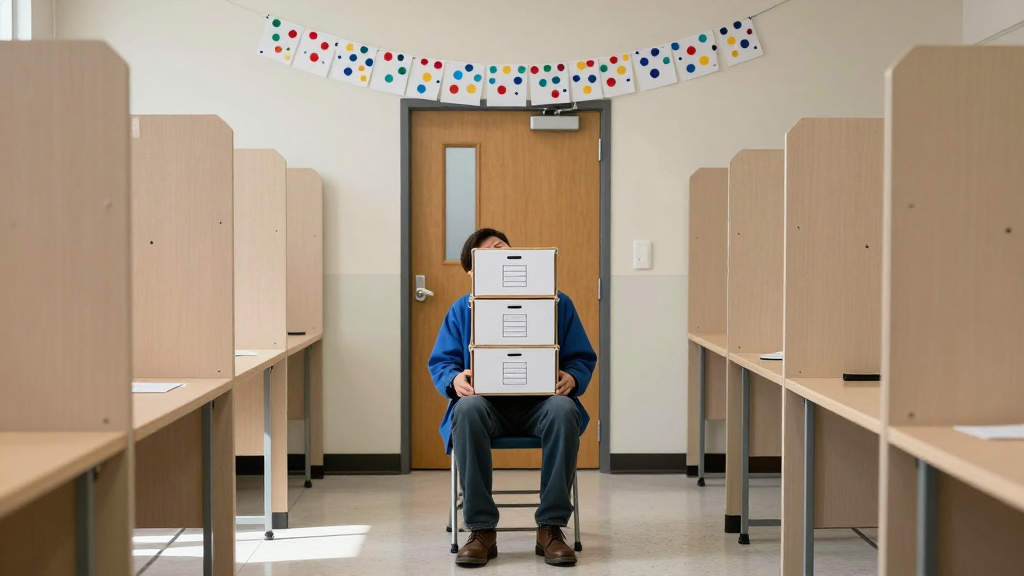
WASHINGTON — The 2026 midterm election is, in all but paperwork, over. As of Friday, 48.6 million Americans had already cast ballots in the 47 states that report them, breaking every early-vote record the race has ever set, and leaving Tuesday to perform what election officials are delicately calling “the ceremonial remainder.”
More than half of all voters in this election will now vote before Election Day itself, as NBC News’s tracker has been documenting all month. Mail alone has been a marvel: more than 57 million mail ballots requested or sent nationwide, up from 52 million in 2022, in an election where a not-insignificant share of the country has been explaining at length that the mail is broken. Americans, it turns out, will describe a machine as corrupt and use it in the same afternoon.
That is not hypocrisy. That is commitment.
By Thursday the country had crossed 46 million early ballots, according to the University of Florida’s Election Lab, a number so large that several states have now mailed more ballots than some states have people. Both parties are thrilled, each at a different thing: Democrats point out that early vote counts have skewed in their favor, while Republicans point out that the system is illegitimate, while also having voted in it, early, by the millions, in person and by mail, repeatedly.
EARLY VOTE AT A GLANCE
- 48.6 million ballots already counted in reporting states, and rising hourly
- 22.7 million mail ballots returned — the same mail Americans have been described as unable to trust
- 25.9 million voted early in person, many during lunch breaks, in lines, joyfully
- Tuesday: two days away, staffed, fueled, and waiting
The change did not happen by accident or by party design, though both parties claimed it immediately, as they claim everything. It happened because voting became a habit, and habits do not respect calendars. In Georgia, early voting began in October and never seemed to stop. In Texas, voters stood in lines that reporters described as long and officials described as normal, which is the American way of saying the same thing twice.
“This is a country that used to debate whether people were too lazy to vote,” said Marion Kettleman, a county clerk in Ohio who has staffed polling places for eleven cycles. “Now we are the ones who have to stand around and be ready. We rehearsed opening procedures on Tuesday. There will be no procedure. There will be a handful of grandfathered-in ballots and one very motivated retiree.”
Not everyone is comfortable. Campaign staff who spent October renting get-out-the-vote buses are watching their fleet depreciate in real time. Pollsters, who have been asked all year to survey a public that keeps voting before being surveyed, have grown philosophical about margins of error measured against people who are no longer available for comment.
It is not a collapse. It is a schedule.
What remains for Tuesday is the part Americans have always liked best: the results. Networks have prepared decision desks staffed by the same experts who correctly called 2024 live and correctly predicted, in 2022, that the red wave would be more of a red ripple, which the industry counts as a career.
The booths will open in every precinct, as they are legally required to, in a country that has already voted.