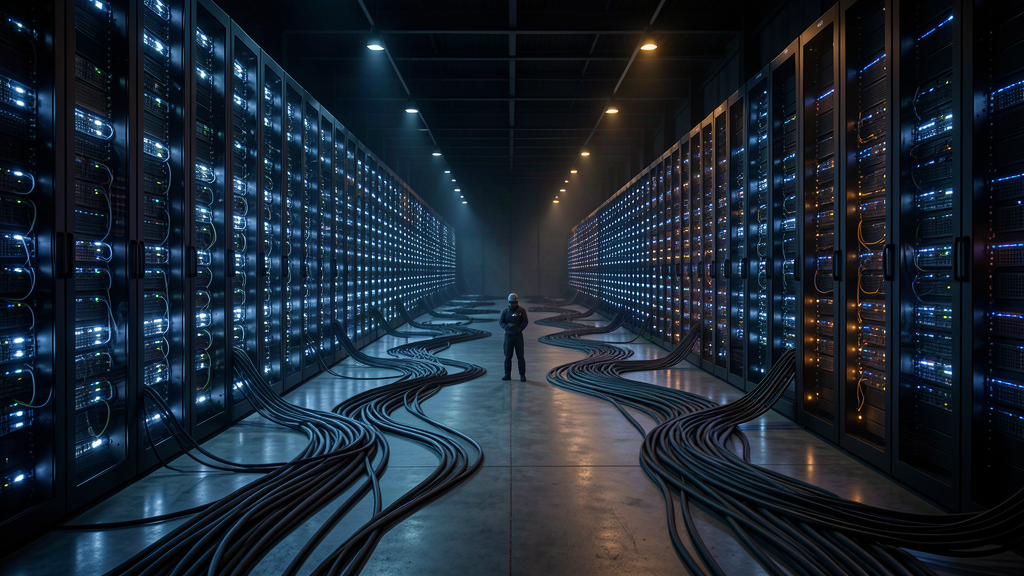
The trouble began, as it does, with a man explaining why the numbers were fine.
At 9:41 a.m. Wednesday, CoreWeave — the company that rents computing power to everyone building artificial intelligence — saw its bond yields approach 15 percent, a rate the bond market reserves for companies that have recently been on fire. By 10:15, the stock had dropped 15.5 percent. By lunch, the phrase “neocloud” had entered the vocabulary of every uncle with a brokerage account. That is how you know it was serious.
The company carries roughly $50 billion in debt to build the data centers the AI boom runs on. The boom, for its part, is expected to spend nearly $1 trillion on infrastructure this year alone, and six trillion more by 2030. The arithmetic is not complicated, and the optimism is doing all the work.
By 2:00 p.m., the Nasdaq had sunk more than 2 percent as investors discovered that the phrase “the AI boom is funded by debt” contains the word “debt,” a word that has historically preceded panics.
By 4:00 p.m., the company had not commented, which in the modern market is indistinguishable from a company on fire.
Analysts spent the evening doing what analysts do: describing a collapse as a “repricing of the capital cycle.”
“The machines are real,” said one portfolio manager, who asked not to be named because he owns the stock. “The demand is real. The debt is also real, and unlike the other two, it has a due date.”
CoreWeave went public in 2025 and is backed by Nvidia, the company that sells the chips the rented computers run on, a relationship investors described as “cozy” and the companies describe as “an ecosystem.” On Friday the shares slid further, extending a slide that has turned the poster child of the AI buildout into the poster child of the AI bill.
The company’s defenders note that it is growing at a rate that would look heroic in any industry that had ever been asked to pay for its own buildings. Its critics note that it is growing at a rate that would look heroic in any industry that had ever been asked to pay for its own buildings.
At press time, CoreWeave had not commented. The machines, as always, were humming.