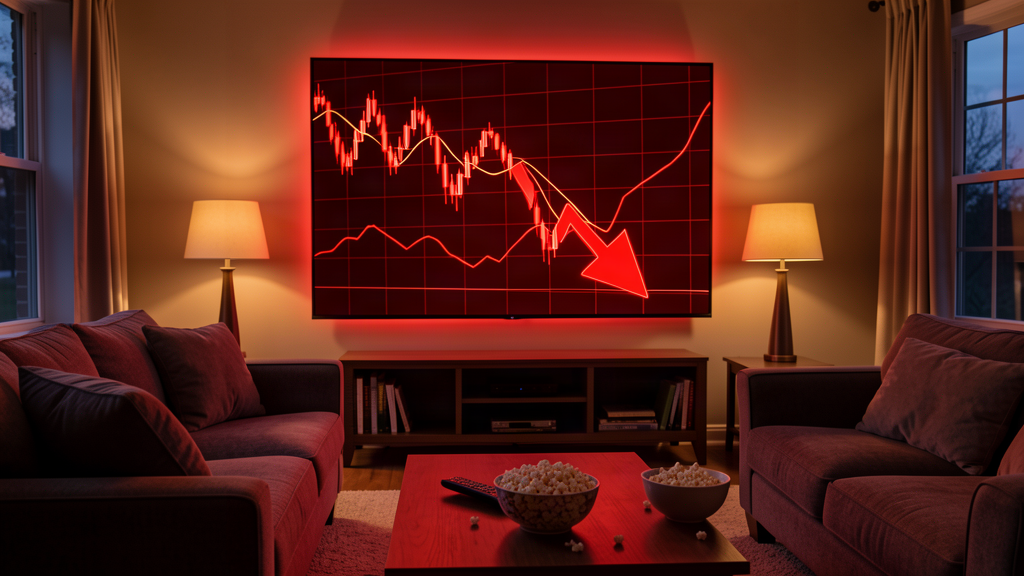
NEW YORK — A floor, in finance, is the place where things stop falling. It is also, as anyone who has ever assembled furniture can tell you, the most stable piece of architecture a home can offer. On Tuesday night, Netflix reached the lowest share price it has offered in two years, and the professional class responded the way it always does at a floor: it told you to buy.
The reason for the drop, per the company’s third-quarter report, was that the advertising business — the part of the subscription you pay less for and watch more of — is not growing as fast as hoped. Netflix trimmed its full-year advertising forecast by roughly $300 million and guided the fourth quarter lighter than Wall Street wanted. The stock slid about six percent afterward, and by Wednesday morning the analysts had already gathered, one by one, like volunteers at a disaster.
Five firms cut their price targets. One cut it to $90. Another, to $125. The collective meaning of those numbers, translated for the reader, is that a stock many Americans own without knowing it is worth slightly less than these people thought in August.
The most earnest defense came from Priya Anand, a strategist whose business card contains the word “global” twice.
“Let me describe what actually happened,” Anand said, over the sound of her own printer. “The company is charging you less for the privilege of seeing fewer commercials than it planned to charge. The revenue line moved down. And the stock fell because of it. Do you understand what you are witnessing? You are witnessing a sale. In any other industry, we call that a sale. If the grocery store dropped the price of milk, you would not call it a collapse. You would buy two jugs, and you would be right. The catalog is the same catalog. The price is better. And the only people upset about it are the people who bought the catalog expecting the price to go up, which was always the strange part of this transaction.”
She was asked whether a stock that has fallen thirty-eight percent since its ten-for-one split can honestly be called a bargain.
“A discount,” she said, “is just a fact that has been standing still long enough to become a mood.”
NETFLIX, IN CASE YOU MISSED IT
- Share price after hours: roughly $64.62, the lowest in two years.
- Since the 10-for-1 split: down about 38 percent.
- Ad-revenue forecast: cut by approximately $300 million.
- Analyst consensus: buy the dip, loudly, on television.
Somewhere in New Jersey, a man is re-watching the same eight episodes at the new price, and the couch — for the first time all quarter — is resting on the floor exactly where it belongs.